Last updated November 23, 2026
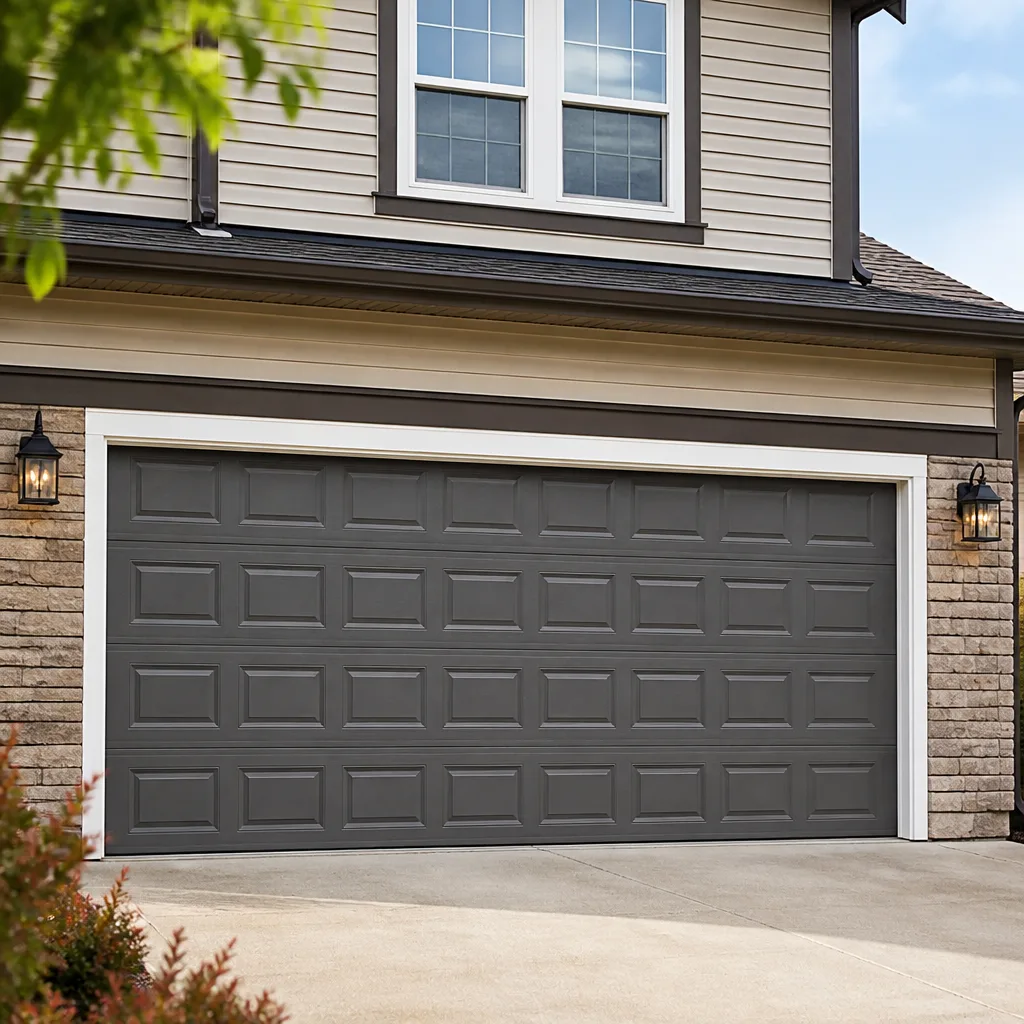 Raised-panel steel
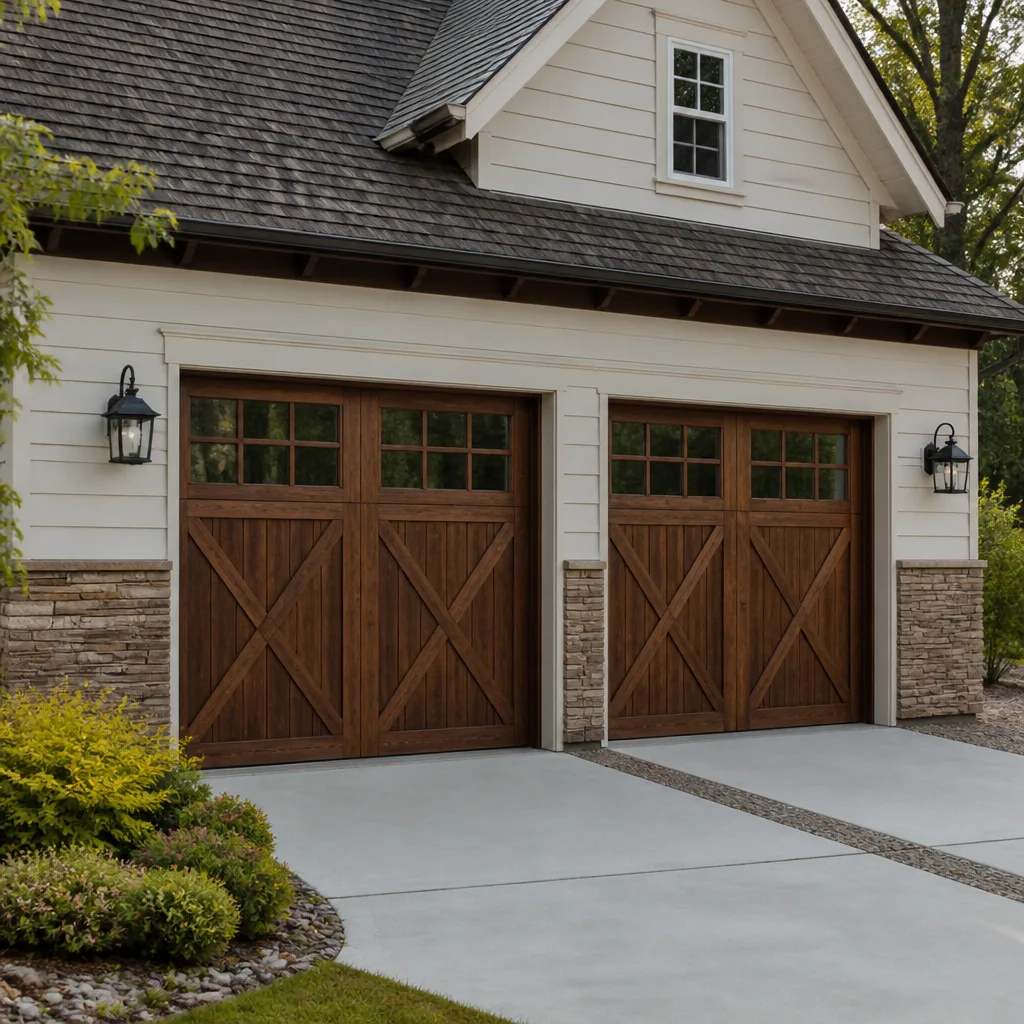 Carriage house
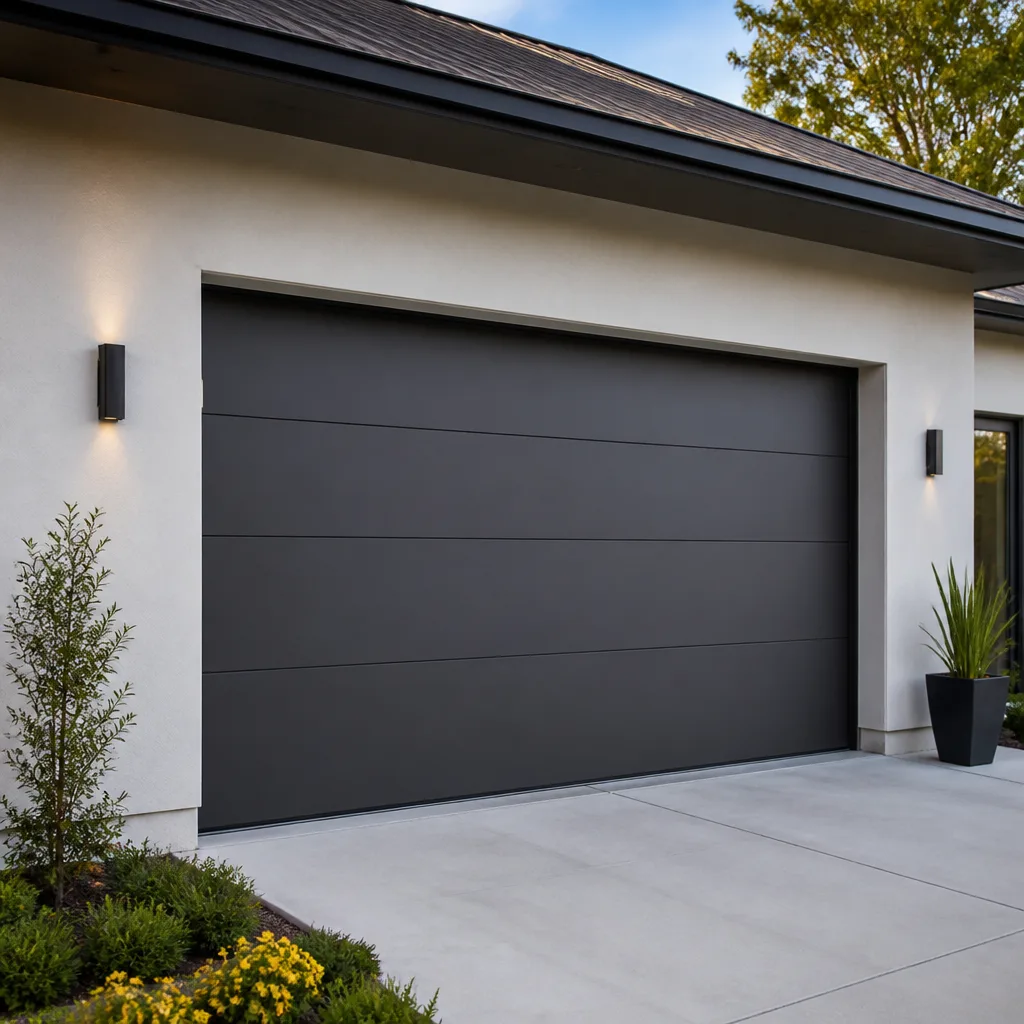 Modern flush
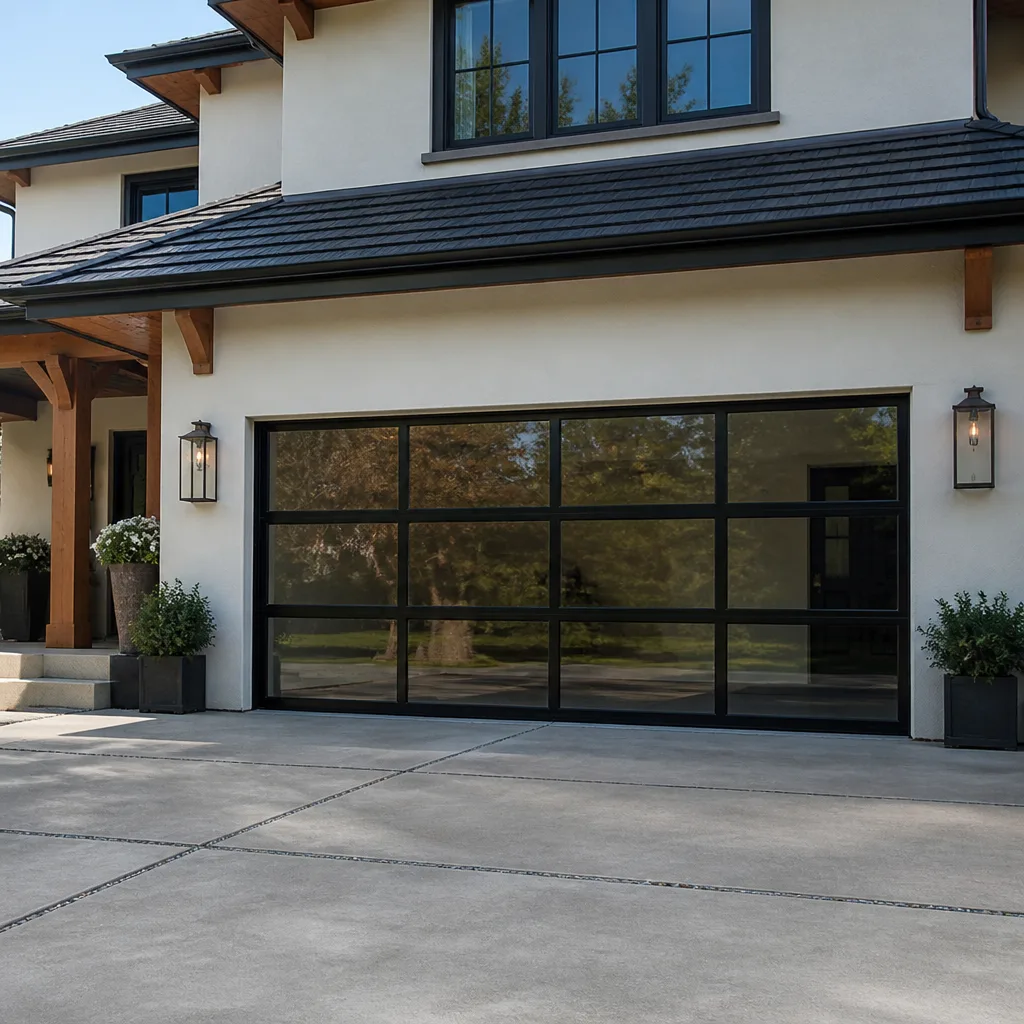 Full-view glass
 LiftMaster openers
 Chamberlain openers
Full 25-point door and opener safety check with every visit - springs, cables, rollers, tracks, and your LiftMaster or Chamberlain opener included
You get a price before we start. It does not change when the pro arrives.
Get your free estimateGarage Door Warning Signs: A Parsippany Homeowner’s Reference Guide
Here’s the mistake we see most often: homeowners wait for a garage door to stop working entirely before they call anyone. But a door almost never fails without warning. It tells you first, usually for weeks, through a sound that’s slightly off, a pause before the door moves, or a cable that sits a little differently than it did last month. The trouble is that most people don’t know which warnings mean “keep an eye on it” and which mean “stop using this door today.” This guide is the reference we wish every Parsippany homeowner had taped inside the garage: how to read the sounds, the movement, and the wear, and how to triage what you’re seeing before it becomes an emergency. Our technicians have up to 10 years of experience, and the pattern they see holds true across the brands we service, from Clopay to Craftsman. By the end, you’ll know exactly what your door is telling you.
Quick Answer
The most serious garage door warning signs are a loud bang from the spring area, a door that’s hanging unevenly or stuck partway, a frayed or off-drum cable, and any door that reverses unpredictably. Those mean stop using the door and call a professional. Milder signs, like grinding, squeaking, or a slight hesitation before the door lifts, usually point to worn rollers, dry hinges, or a weakening spring and can be monitored for a short window while you book a repair. In Parsippany, our technicians treat spring and cable symptoms as safety-critical, because those components are under extreme tension and can fail without much warning.
Styles & brands we work with
- Raised-panel steel
- Carriage house
- Modern flush
- Full-view glass
- LiftMaster openers
- Chamberlain openers
Table of Contents
- Sound-to-Diagnosis: What Each Noise Tells You
- Reading the Cables: Off-Drum vs. Frayed
- Movement Anomalies and What They Mean
- The Opener as a Diagnostic Tool
- When Springs Are the Problem
- Stop Using the Door vs. Monitor for 30 Days
- Seasonal and Climate Factors in Parsippany
- When to Call a Professional
Sound-to-Diagnosis: What Each Noise Tells You
The sound your door makes is the fastest diagnostic clue you have, and it maps fairly cleanly to a specific component. When a customer describes a noise over the phone, the description usually narrows the problem down before anyone opens the hood. The key is to listen for what kind of noise it is and where it seems to come from.
A grinding noise is the most common call we get. Grinding usually points to worn roller bearings or a roller that’s seized and dragging against the track. It can also come from dry hinges that have lost their lubrication. Grinding is rarely an immediate emergency, but it does accelerate wear on the track and the door’s hinges, so it’s worth booking within a few weeks rather than ignoring.
A popping noise is a different category. A pop or snap often means a cable has jumped its drum, or a spring has slipped a winding point. Popping is more serious than grinding because it usually precedes a full failure. If you hear a pop and then the door runs unevenly, that’s your cue to stop operating it and call us.
A banging noise – especially a single loud bang followed by the door refusing to open or a loss of tension – is the classic signature of a broken torsion spring. That’s the stop-now sound. A snapped spring can leave the door heavy and dangerous to lift, so it’s not a “we’ll get to it tomorrow” situation.
In our experience serving Parsippany, the vast majority of these calls break down into three groups: rollers (grinding), cables (popping), and springs (banging). A technician trained across eight major brands knows how each system sounds when it’s healthy, which shortens the diagnosis and gets you to a fix faster. The good news is that most of these repairs are straightforward, and the sooner you call, the less risk of a cascade of damage to the track and opener.
Reading the Cables: Off-Drum vs. Frayed
Cables are one of the most misunderstood parts of the garage door, and homeowners often confuse two very different conditions. One is a cable that’s “off” – meaning it’s come off the drum or the bracket. The other is a cable that’s frayed but still tracking. These look similar in a quick glance, but they need different responses, and the urgency is not the same.
A cable that’s off usually means the door is hanging, the drum has unspooled, or the bottom bracket has come loose. This is a stop-using situation. Don’t try to re-seat it yourself, because a cable under tension can move violently and cause serious injury. Call us and we’ll come look. We treat this as a safety-critical repair, not a routine fix.
A frayed cable is a cable with broken strands but still on its drum. It’s still a warning sign, but it’s more of a “book this soon” situation. Frayed cables lose strength and can fail under load, and the failure often happens while the door is in motion. We recommend replacing both cables as a matched pair, since they wear together. If you’re not sure which condition you’re looking at, take a photo from a safe distance and call. A technician can tell you within a sentence or two what you’re dealing with.
One local note: in Parsippany, our winters bring freeze-and-thaw swings that can stress cables and drums more than people realize. A cable that sat fine all summer can start to show wear after a cold snap. If you’re inspecting your door in late fall or early spring, look closely at the cables; that’s when we see more of them.
Movement Anomalies and What They Mean
The way a door moves tells you almost as much as the sound it makes. Most movement problems fall into three categories: uneven rise, excessive bounce, and reversal on close. Each one points to a different component.
Uneven rise – the door going up at an angle, or one side lagging behind the other – usually means a spring or cable imbalance. The door should lift smoothly and evenly. If one side is dragging, that side’s spring or cable is doing less work than it should. This adds strain to the opener and the track, and it often gets worse over time. If uneven rise develops suddenly, stop and call; if it’s been creeping up gradually, book a repair soon.
Excessive bounce – the door bouncing when it reaches the top or bottom – often means the springs are out of balance, the opener’s force settings are off, or the door is not running evenly. Bounce puts extra load on the opener and the door’s frame, and it can lead to opener failure if left alone. A technician can rebalance the springs and reset the force on the opener.
Reversal on close – the door reversing before it hits the floor, or reversing after it contacts something – triggers the safety sensors. It’s usually the result of misaligned or dirty sensors, but it can also mean the opener’s limit settings are off or the track is obstructed. Never disable the safety sensors to make the door close; that’s a safety feature, not a nuisance. If the door won’t close and you’ve cleaned the sensors, give us a call.
If you see any of these movement problems, it’s worth knowing that our garage door repair work covers springs, cables, and alignments – the three most common causes. In Parsippany, we see movement anomalies most often after the first hard freeze of the year, when cold contracts the metal and slightly shifts the balance.
The Opener as a Diagnostic Tool
One of the most useful diagnostics we use is watching what the opener does when the door fails to move. Homeowners often call and say “the motor is running but the door isn’t moving,” and they assume the opener is broken. In our experience, that’s usually not the opener. It’s a disconnect between the motor and the door.
Here’s the sequence to check, in order:
- Listen for the motor. If you hear it hum or run but the door doesn’t move, the motor is likely fine and the problem is downstream. If you hear nothing, it’s electrical, a dead remote, or the safety sensor circuit.
- Look at the manual release. The emergency release cord or lever can be pulled. If it’s been pulled, the door is disconnected and the opener runs without moving the door. Re-engage it and test.
- Check the safety sensors. If the door reverses or won’t close, check the sensors at the bottom of the tracks. A dirty lens or a misaligned bracket is the usual culprit.
- Check the opener’s force and limit settings. If the door moves a little and stops, the limit switch may need adjustment. Don’t force it; that’s a technician setting.
- Check the battery in the remote. A dead battery is the simplest cause of “the door won’t respond.”
If none of those steps solve it, the issue may be a worn gear, a failing capacitor, or a board fault inside the unit. That’s when our garage door opener repair team comes in. We service LiftMaster, Chamberlain, Genie, and Craftsman openers – both legacy models and newer smart-drive systems. Knowing the brand and the model lets us arrive prepared, rather than diagnosing from scratch.
When Springs Are the Problem
Springs are the single most dangerous component in a garage door, and they’re also the one homeowners most often want to handle themselves. We understand the temptation, but a torsion spring is under extreme tension. If it snaps, the door can drop, and a person standing under it is at real risk. This is not a DIY repair, and it’s one of the reasons we treat spring repair as a safety-first specialty.
Signs that springs are the problem:
- A loud bang from the spring area, followed by the door refusing to lift.
- A visible gap in the spring coil – a fractured spring sometimes shows a clean break.
- The door feels very heavy when you lift it manually (with the opener disconnected).
- A hesitation before the door lifts, especially after the door has been sitting.
- The door rises a few inches and stops.
If you see any of these, stop using the door. Don’t try to lift it, and don’t try to adjust or replace the spring yourself. Call us. Our garage door spring repair service is designed for this exact situation, and a technician will arrive with the knowledge to identify the spring type and assess whether a pair replacement is needed. Springs typically come in pairs, and we recommend replacing both at once so they wear evenly.
In Parsippany, spring failures peak during temperature swings – the kind we get in early spring and late fall. If your door starts to hesitate or bang, that’s your cue to call. A check in the shoulder seasons can catch a fraying spring before it fails.
Stop Using the Door vs. Monitor for 30 Days
This is the part of the guide we want homeowners to remember most clearly: how to tell which warning signs mean “stop” and which mean “you have a little time.” Here’s the breakdown we give customers.
Stop using the door immediately if:
- You hear a loud bang from the spring area or see a broken spring.
- The door is hanging unevenly or off its track.
- A cable is off its drum or visibly broken.
- The door reverses unpredictably or won’t close (safety sensors excluded).
- The door is stuck partway up or down and won’t move.
- The door feels extremely heavy when lifted manually.
You can monitor for around 30 days if:
- The door grinds or squeaks but opens and closes normally.
- One hinge is a little noisy.
- The door hesitates by a second or less, but only occasionally.
- The opener’s light flickers but the door works.
The 30-day window is a guideline, not a hard limit. If any monitored symptom gets worse, treat it as a stop sign. We’d rather you call an extra time than have a spring snap while a car is underneath. In our experience, the “monitored” signs rarely fix themselves, and the most expensive repairs usually start as small, ignored symptoms.
Seasonal and Climate Factors in Parsippany
Parsippany’s weather gives garage doors a workout. Our summers are humid, and our winters bring repeated freeze-and-thaw cycles. That combination affects the door in specific ways.
Cold weather contracts metal. Springs, cables, and tracks are all metal, and when the temperature drops, they contract slightly. That contraction can turn a spring that was barely holding into a failure point. The freeze-thaw cycles also allow moisture to work into hinges and bearings, which can lead to rust, stiffness, and the grinding sound we described earlier. If you live in a neighborhood like Lake Hiawatha or Mount Tabor, where older homes sometimes have older doors, you may see more of this. Newer construction in Parsippany often uses different spring systems, but the seasonal pattern is similar.
Humidity in summer is its own factor, especially for wood doors or older steel doors with paint failures. Moisture can cause the door panels to warp slightly, which changes the balance and can make the door bind. If you notice the door sticking in July and August, it’s often a balance issue caused by humidity, and a technician can adjust it.
Parsippany gets snow, and salt from the road can end up on the door’s bottom panel or track. Brushing the door down after a storm and keeping the tracks clear helps. It’s a small routine, but it’s one we recommend to customers who want their doors to last.
Common Mistakes to Avoid
- Ignoring a hesitation. A door that pauses before lifting is often a partially fractured spring. Waiting can mean the door fails while your car is under it or while someone is walking through. Call us when you first notice the pause.
- Trying to adjust a spring yourself. Torsion springs store enormous energy. A DIY adjustment is one of the most common causes of serious injury in this trade, and it’s why we treat spring work as a safety-critical service.
- Disabling the safety sensors. If the door won’t close, the sensors are probably dirty or misaligned. Cleaning and adjusting them is safe; disabling them is not. Call if cleaning doesn’t work.
- Lubricating the wrong parts. A little silicone lubricant on the rollers and hinges is fine, but greasing the tracks will attract dirt. If you’re not sure what to use where, ask us and we’ll walk you through it.
- Assuming a brand means a different contractor. Many homeowners think their Clopay or Amarr door needs a specialist. Our team is trained across eight major brands, so you don’t have to hunt for someone who “knows” your model.
- Waiting for a total failure. The best time to book a repair is when you first hear the noise, not when the door quits. An early visit is almost always cheaper and less disruptive than an emergency call.
- Putting off a spring inspection in Parsippany’s shoulder seasons. Late fall and early spring are when springs are most stressed. A quick inspection in those windows catches problems before they fail.
See the difference
 Before
 After
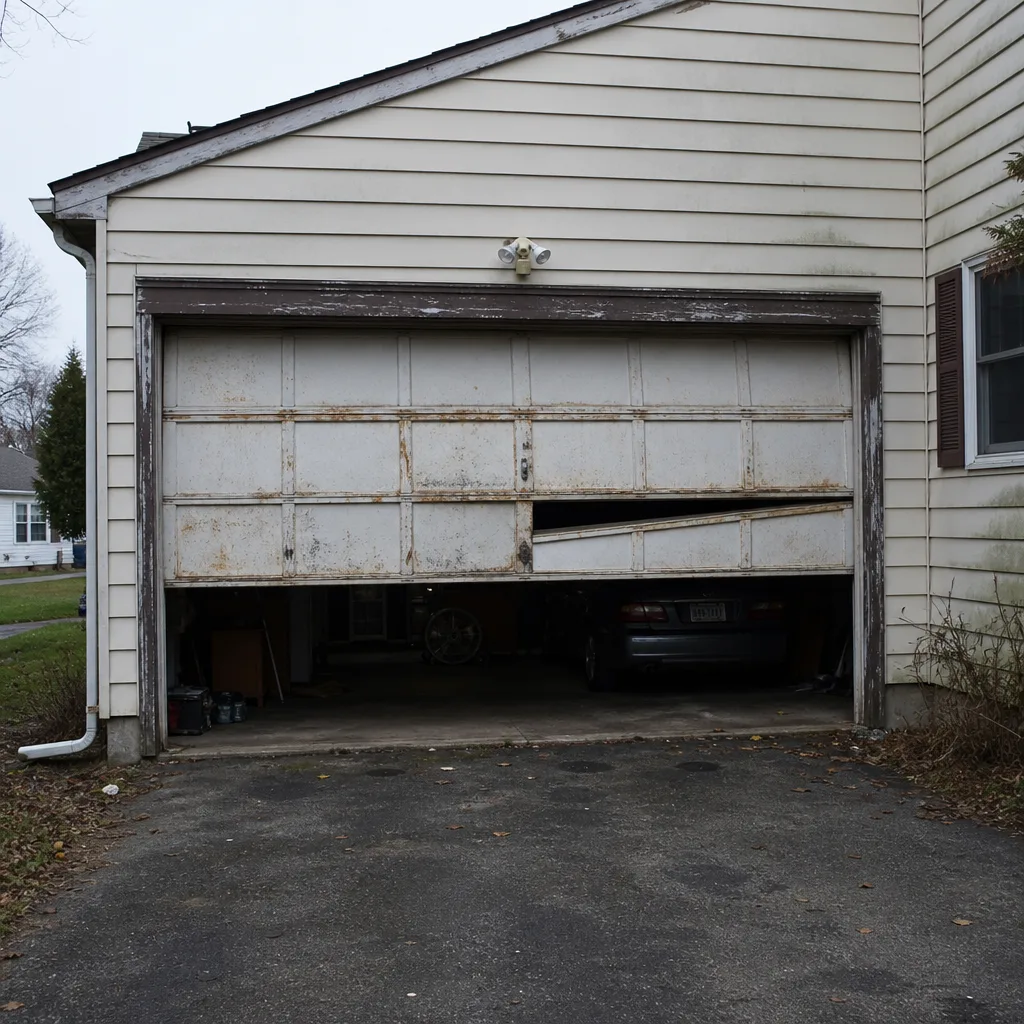 Before
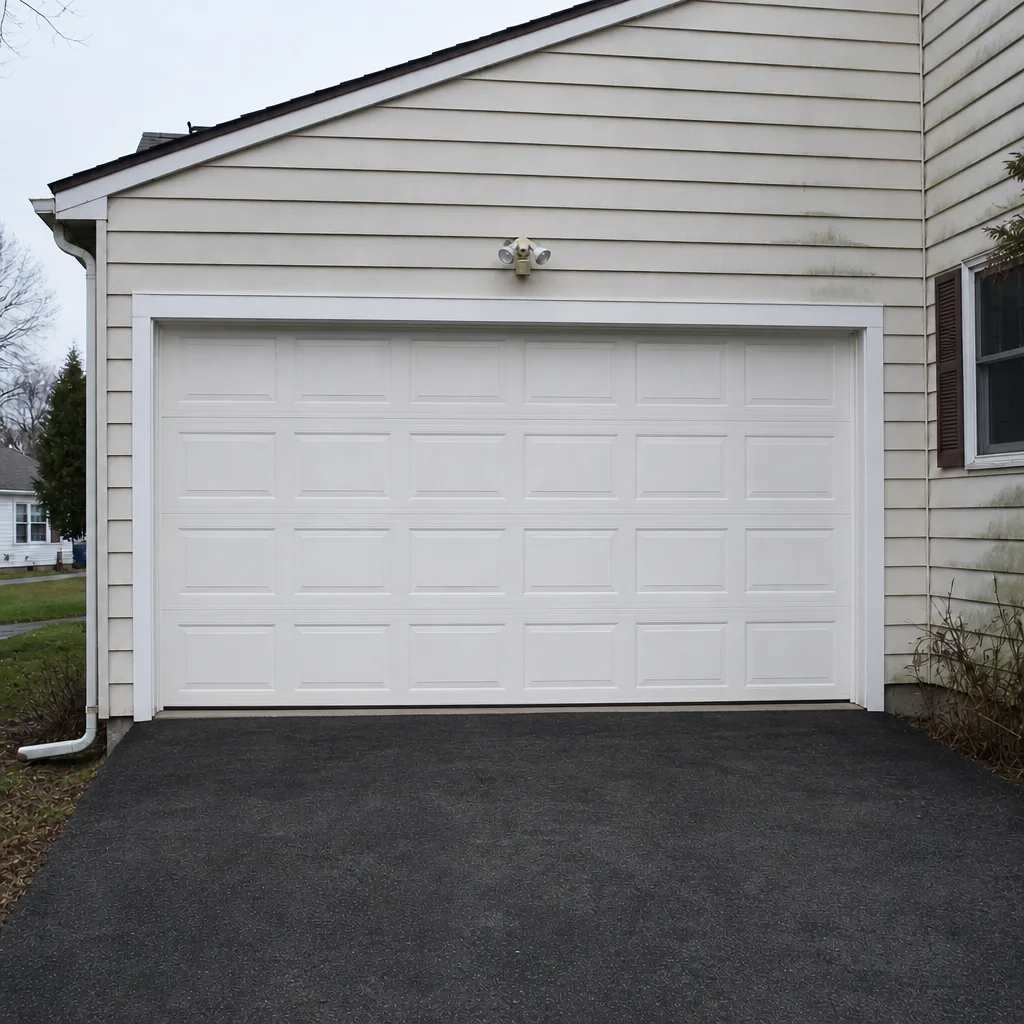 After
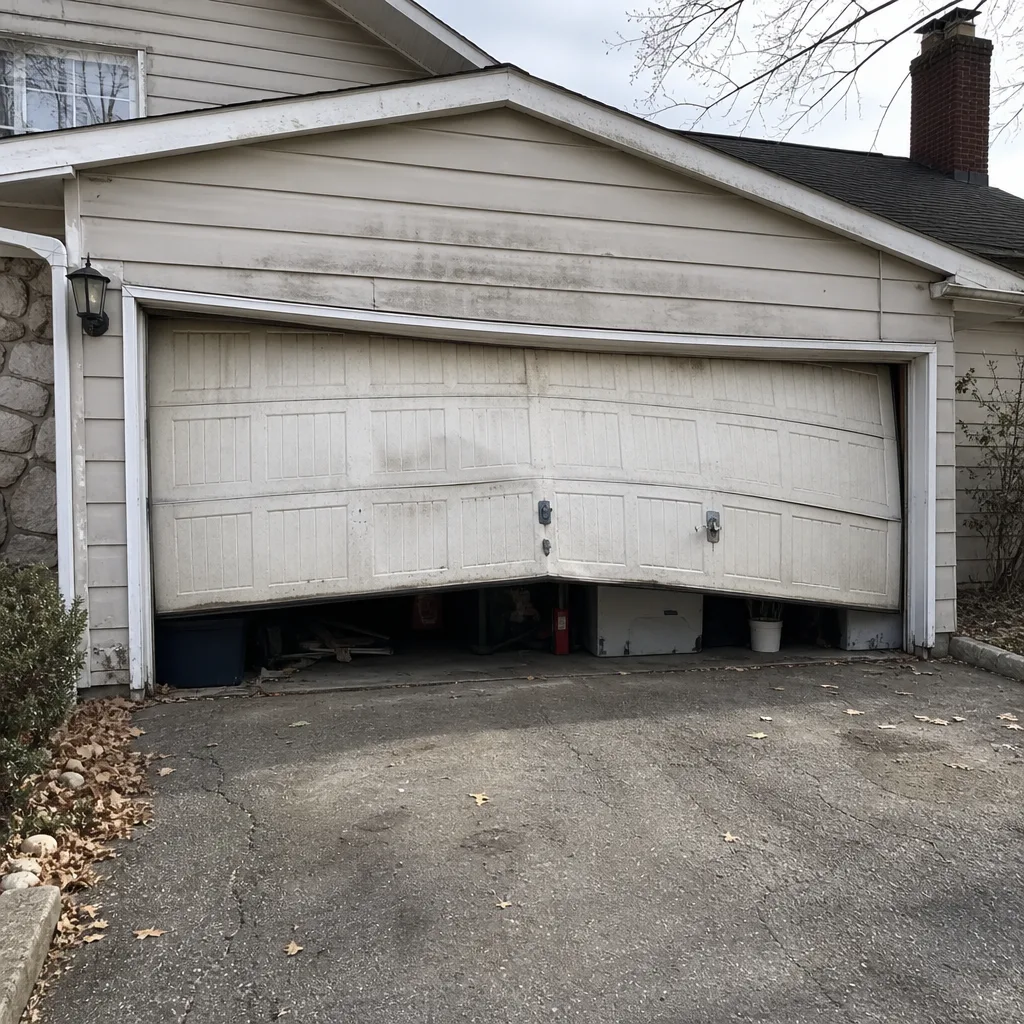 Before
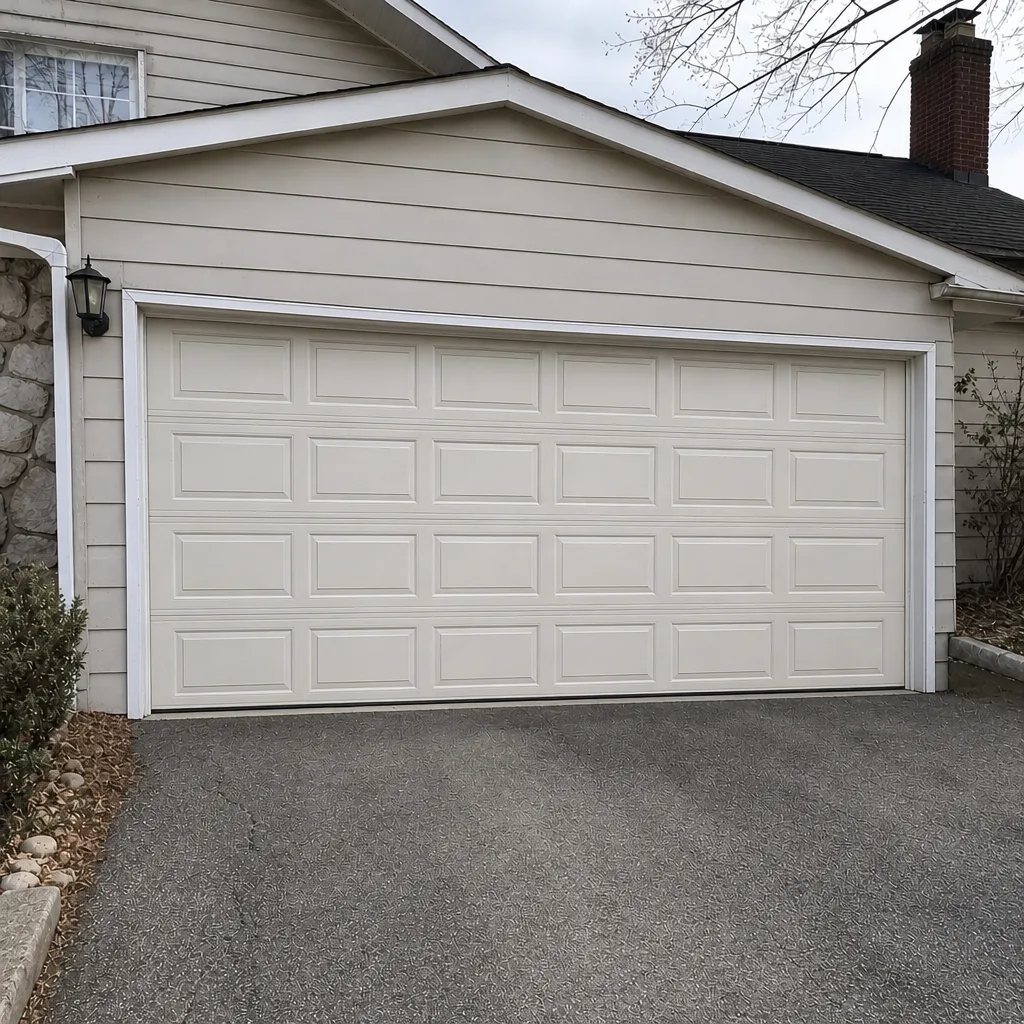 After
When to Call a Professional
Call us when the door bangs, when it hangs unevenly, when a cable is off or frayed, when the door reverses unpredictably, or when you’re unsure whether what you’re hearing is safe. Our technicians have up to 10 years of experience, and they’re trained to diagnose across LiftMaster, Chamberlain, Genie, Clopay, Amarr, Wayne Dalton, Craftsman, and Raynor systems. We handle repair, opener service, spring work, and full installation. We’re a good fit if you’re in Parsippany and want a single company that can handle whatever your door needs. Our technicians are experienced with the multi-brand setups common in Parsippany homes, and we work on the brand already in your garage. Parsippany Garage Door Repair Co offers free estimates in Parsippany – call (855) 513-2771. Whether it’s a grinding roller or a broken spring, one call covers it.
Frequently Asked Questions
The most serious warning sign is a loud bang from the spring area, often followed by the door refusing to lift or a visible gap in the spring coil. That points to a broken torsion spring, which is a stop-now situation because the door can drop unexpectedly. Call immediately and don’t try to lift the door manually. Call (855) 513-2771 for a free estimate.
Yes, usually, but you should book a repair soon. Grinding is most often caused by worn roller bearings or dry hinges, and it tends to get worse with use. If the grinding starts suddenly or is accompanied by a popping or banging sound, stop using the door and call. A technician can diagnose it in minutes. Call us if you’re in Parsippany and want a same-day look.
A cable that’s off will have unspooled from its drum or come loose from the bracket, and the door will usually hang unevenly. A frayed cable is still on its drum but has broken strands. An off cable is a stop-now situation; a frayed cable is a book-soon situation. In both cases, don’t try to reseat it yourself. Call (855) 513-2771.
Probably not. In our experience, a motor that runs while the door stays put usually means the door is disconnected from the opener, the safety sensors are triggered, or the manual release has been pulled. Start with those checks before assuming the opener is bad. We service Chamberlain, LiftMaster, Genie, and Craftsman units and can diagnose it quickly. Call for an estimate.
A quick visual and listening check once a month is a good habit, and we recommend a closer look in late fall and early spring. Parsippany’s freeze-thaw cycles stress springs and cables, so those shoulder seasons are when problems tend to show up. If anything sounds or looks different, call us. Estimates are free.
Sometimes, but it’s not without risk. A hesitation that’s occasional and very brief can be monitored for 30 days, but if it gets worse or happens every time, treat it as a stop sign. A partially fractured spring can fail at any point. Call (855) 513-2771 and we’ll walk you through whether to book a visit now or later.
The Bottom Line
Garage door failures almost always telegraph themselves first. Grinding means rollers or hinges, popping means cables, and banging means springs. Movement problems – uneven rise, bounce, reversal – point to balance, force settings, or sensors. The opener is usually a diagnostic tool rather than the problem. And the big split is between signs you can monitor for 30 days and signs that mean stop using the door right now. If you’re in Parsippany and you’re unsure which category your door falls into, call Parsippany Garage Door Repair Co at (855) 513-2771 for a free estimate. We work on the brand already in your garage, and one call covers repair, opener, spring, or full replacement.
Written by the team at Parsippany Garage Door Repair Co.