Last updated November 23, 2026
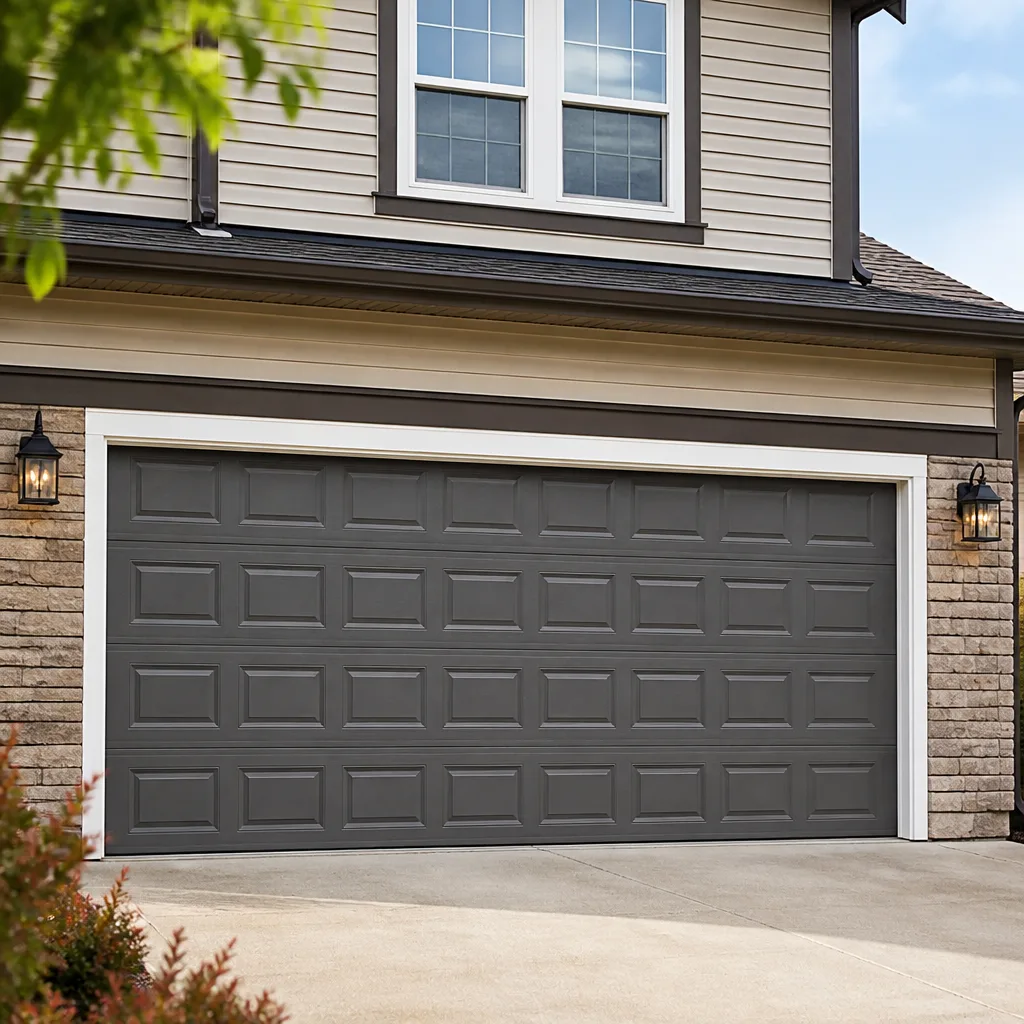 Raised-panel steel
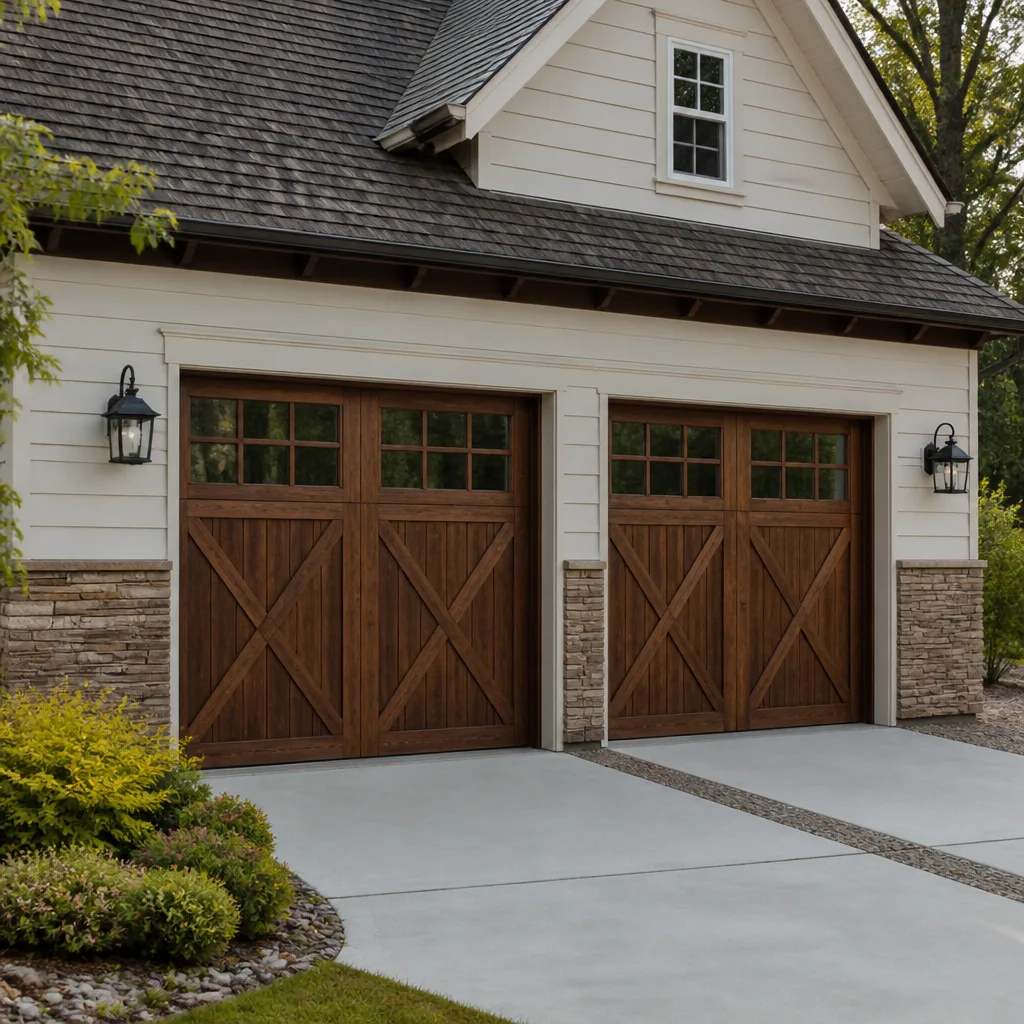 Carriage house
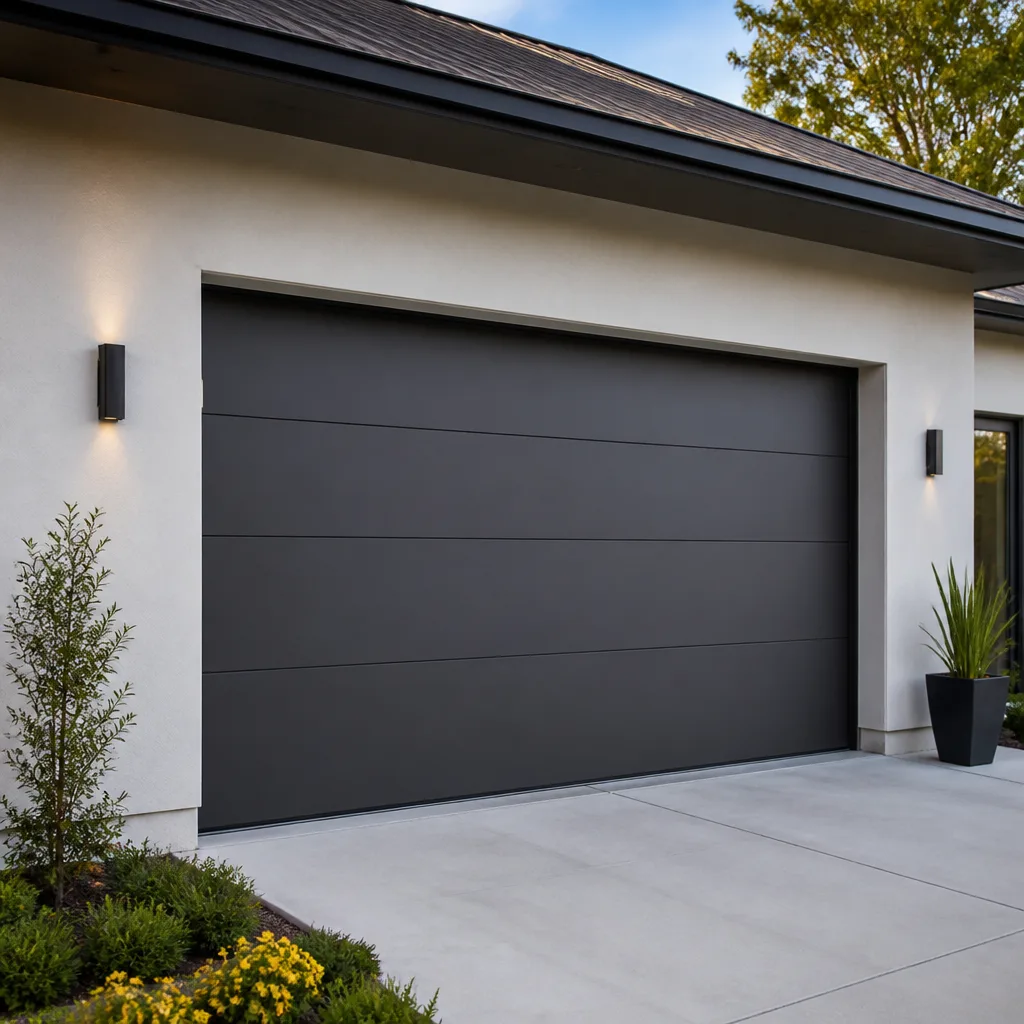 Modern flush
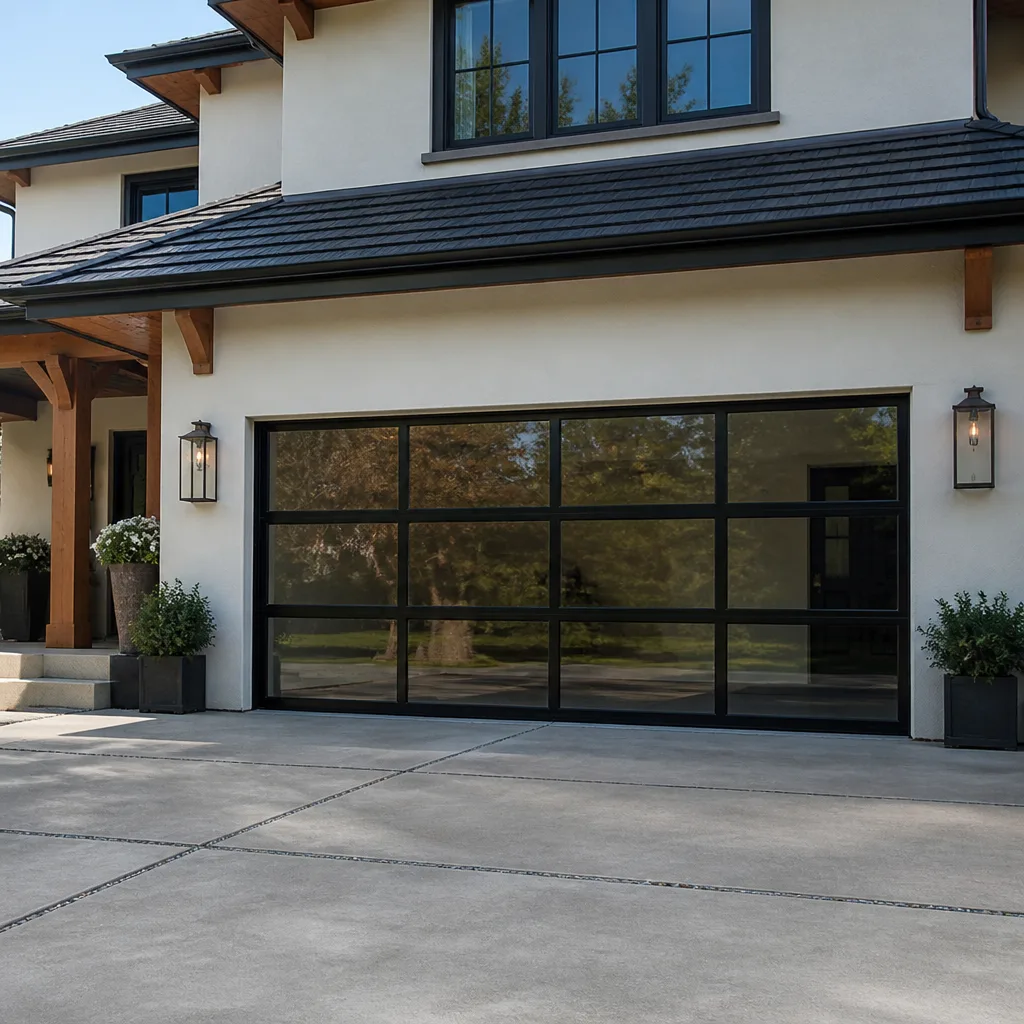 Full-view glass
 LiftMaster openers
 Chamberlain openers
Full 25-point door and opener safety check with every visit - springs, cables, rollers, tracks, and your LiftMaster or Chamberlain opener included
You get a price before we start. It does not change when the pro arrives.
Get your free estimateThe Complete Guide to Garage Doors in Parsippany
Most Parsippany homes were built before insulated garage doors were standard, which means the door you inherited is probably costing you more in heating bills than you realize. A single-layer steel door on a 1970s colonial has roughly the insulating value of a closed window, and in a Morris County winter that gap shows up on your gas bill every month. The bigger problem is that most garage door advice online is written for a national audience that doesn’t deal with sub-zero snaps and humid August afternoons in the same year. This guide maps the real decisions (material, drive type, insulation, brand, size) to the homes and climate you actually live with in Parsippany.
Quick Answer
For most Parsippany homeowners, a steel-insulated door on a belt-drive opener is the best fit for the climate and the 1970s – 1990s colonial and split-level housing stock dominant here. Choose a brand with real local parts availability (Raynor, LiftMaster, Chamberlain, Genie all have it), and size the door to your actual header clearance, not the nominal opening. If your door is a single-layer original from the build year, upgrading insulation alone will usually cut heat loss through the garage more than any other single change.
Styles & brands we work with
- Raised-panel steel
- Carriage house
- Modern flush
- Full-view glass
- LiftMaster openers
- Chamberlain openers
Table of Contents
- How Parsippany’s Climate Reshapes Garage Door Choices
- Steel vs. Wood vs. Fiberglass Under Real Morris County Conditions
- Door Sizes and Header Clearance in 1970s – 90s Parsippany Homes
- Belt, Chain, or Screw: Which Drive Holds Up Here
- Brand Availability and Local Parts Supply
- How to Read an R-Value Label Honestly
- A Seasonal Maintenance Routine for Parsippany Doors
- Repair or Replace: A Decision Framework
How Parsippany’s Climate Reshapes Garage Door Choices
Parsippany sits in a part of Morris County that gets the full swing of a humid continental climate: winters that drop below zero on the coldest nights, summers that climb into the 90s with humidity that makes an attached garage feel like a sauna, and a spring and fall that alternate between soaking rain and dry, windy stretches. That cycle is hard on garage doors because it drives constant thermal expansion and contraction. Steel panels move a fraction of an inch with every big temperature change. Wood moves more, and in different directions depending on grain. Fiberglass moves less but can get brittle in deep cold.
What this means for a Parsippany homeowner is that the material you pick matters less for its looks than for how it handles cycling. A door that sees a 60-degree swing between January and July is being worked every season whether you open it or not. The panels, hinges, and weather seal all take the load.
The second climate factor is snow load on the roof and the ice that builds at the door’s bottom seal. A door that doesn’t seal tight at the threshold lets meltwater creep under, and in a Parsippany February that water refreezes at night and can bind the bottom panel to the slab. The right bottom seal and a threshold that drains away from the opening solve more of this than most people realize.
Finally, humidity. An attached garage without climate control is a humid space in summer, and humidity drives rust on steel hardware (hinges, rollers, springs) faster than most homeowners expect. Stainless or galvanized hardware in the high-wear spots is worth the small upgrade here.
Steel vs. Wood vs. Fiberglass Under Real Morris County Conditions
The material question is where national guides fall apart, because they tend to compare materials in a vacuum. Here’s how each one actually behaves in a Parsippany garage across a full year.
Steel
Steel is the default for a reason. It’s the most dimensionally stable of the three under thermal cycling, it holds paint well, and insulated steel doors are widely available in the sizes that fit older colonial and split-level openings. The trade-off is that steel dents rather than flexes, and a dented panel on an older door can be hard to match. Choose a steel door with a factory finish and galvanized hardware for the best run in this climate.
Wood
Wood looks right on a lot of Parsippany colonials, and a well-built wood door can last decades. But wood moves. In a Morris County year it will swell in humid July and shrink in dry January, and that movement stresses joints, finish, and hardware. A wood door here needs a real maintenance schedule (reseal every couple of years) and a garage that doesn’t stay wet. It’s a good choice if you’re committed to the upkeep and the look matters to you.
Fiberglass
Fiberglass resists rot and rust and doesn’t expand much, which makes it appealing in a humid climate. The catch is cold-weather brittleness and impact behavior: a fiberglass panel that takes a hit in a Parsippany January can crack where steel would dent. It’s a reasonable fit for a protected opening or a garage that doesn’t see much impact, less so for a door facing a driveway where plow spray and stray basketballs happen.
- Best all-around for Parsippany: insulated steel with galvanized hardware.
- Best for a specific look with upkeep: wood, resealed on schedule.
- Best for rust-prone or wet sites: fiberglass, with eyes on cold-weather impacts.
Door Sizes and Header Clearance in 1970s – 90s Parsippany Homes
Most Parsippany garages built in the 1970s through the 1990s fall into a handful of standard layouts, but the openings aren’t as uniform as newer construction. A single-car colonial garage is usually a 9-foot-wide opening. A two-car attached garage is commonly 16 feet. Splits and raised ranches sometimes used an 8-foot single or a slightly off-nominal width that reflects the builder’s framing on that street. That’s why measuring matters: a “standard” 16-foot door won’t always drop into a 1985 opening without checking.
Header clearance is the other variable. The header is the beam across the top of the opening, and the space above and behind it determines how much room the door has to travel up and back when it opens. In a lot of 1970s – 90s Parsippany homes, the garage ceiling is lower than in newer builds, and there may be a beam, ductwork, or a storage shelf eating into the clearance.
- Measure the opening width and height at the finished frame, not the rough framing.
- Measure side clearance (the space between the opening and the nearest wall) on both sides.
- Measure headroom from the top of the opening to the ceiling.
- Measure backroom from the opening to the back wall, since the door travels into that space.
- Note obstructions: ducts, beams, shelves, or a low ceiling that limit travel.
Those five numbers are what a supplier and an installer need to quote the right door and the right track configuration. A low-headroom setup can call for a different track and spring arrangement, and skipping the measurement is how a replacement door ends up not fitting.
Belt, Chain, or Screw: Which Drive Holds Up Here
An opener’s drive type decides how loud it is and how well it tolerates the temperature swings of an attached garage with no climate control. That’s the right lens for a Parsippany garage.
Chain drive
Chain drives are the most common and the most affordable. They’re loud and they don’t love cold: a chain that’s slightly over-tensioned will clatter and bind more in January. If your garage is detached or the door is far from living space, chain is a fine value pick.
Belt drive
Belt drives are quieter and smoother, which matters in an attached garage where the door is under or beside bedrooms. A good belt drive handles the thermal cycle here well and is the usual recommendation for attached garages in this region. It’s our default suggestion for most Parsippany homes.
Screw drive
Screw drives are durable and need less maintenance over time, but they’re noisier than belt and the screw can collect grit. They’re a reasonable fit for a detached garage or a shop where noise doesn’t matter.
Whatever drive you choose, the opener itself should be a modern unit from a brand with local service support. LiftMaster and Chamberlain units are the most common in this area, and a smart-capable LiftMaster or Chamberlain opener pairs well with a belt drive in an attached garage. For more on opener troubleshooting and replacement, see our page on garage door opener repair.
Brand Availability and Local Parts Supply
Here’s a hidden risk almost nobody talks about: choosing a door or opener brand with no local parts supply chain in Morris County. A door is a long-lived piece of equipment, and over its life it will need springs, rollers, hinges, and maybe a panel. If the brand isn’t stocked or serviced locally, a repair can turn into a weeks-long wait for a part. That’s why we work on the brands we do (Raynor, LiftMaster, Chamberlain, Genie, plus Clopay, Amarr, Wayne Dalton, and Craftsman) so we can match the system already in your garage without a part hunt.
Raynor and Clopay doors are common on Parsippany homes, and LiftMaster and Chamberlain openers are the most frequent units we see. Genie round out the older and value end. The point isn’t the name itself; it’s whether a technician can arrive with the right component in hand rather than ordering it and coming back.
- Check service coverage before you buy. Ask whether the brand is routinely serviced in your area.
- Favor brands with broad local distribution. Fewer waits on springs, rollers, and panels.
- Match opener and door where possible. A door and opener from a serviceable brand pair keeps both repairable.
That single question (can this brand be repaired locally?) saves more headaches than comparing catalog specs. When a door won’t move, brand familiarity is what lets a technician diagnose on the first visit.
How to Read an R-Value Label Honestly
R-value measures resistance to heat flow. Higher is better, but the number on a door’s label is easy to inflate. The honest way to read it is to look at the construction, not just the number. A single-layer steel door has almost no insulating value no matter what a marketing sheet implies. A double-layer steel door with a polystyrene core has real but modest value. A triple-layer door with polyurethane foam gets to the higher end of what’s achievable in a garage door. The label is a starting point; the layers tell the truth.
Insulating set a number that isn’t there by quoting R-value for the center of the panel while ignoring the frame, the gaps, and the bottom seal, where most heat actually escapes. A superbly insulated panel on a poorly sealed opening still loses heat around the edges. In a Parsippany winter, that matters more than the panel number.
- Single-layer: very low insulating value. The original 1970s – 90s door you may have inherited.
- Double-layer: modest improvement, especially with a solid core material.
- Triple-layer: the best real-world performance when the seal is tight.
- The seal matters as much as the panel. Weatherstripping and a bottom seal do a lot of the work.
For most Parsippany homes replacing an original single-layer door, a double-layer insulated door is the practical sweet spot. It’s a real upgrade on heat loss without the cost of a triple-layer panel.
A Seasonal Maintenance Routine for Parsippany Doors
Garage doors fail gradually, not all at once. A handful of checks a couple of times a year keep a door working through a full Morris County climate cycle and help you catch a problem before it becomes a call. Here’s the routine we suggest.
- Look and listen. Open and close the door and watch and listen for jerky travel, squeaks, or grinding. A smooth door is a healthy door.
- Check the balance. Disconnect the opener (pull the release) and lift the door halfway. It should hold there. If it drops, the springs are losing tension.
- Lubricate the moving parts. Hinges, rollers, and the track get a garage-door lubricant, not household oil.
- Inspect the bottom seal. Flat, cracked, or torn seals let in meltwater and cold air. Replace them before winter.
- Test the safety reverse. Put an object in the door’s path and confirm it reverses. This is a safety function, not a convenience.
- Clean the tracks. Wipe out grit and debris so the rollers don’t jump. Don’t lubricate the track itself.
One thing to leave to a professional: the springs. Garage door springs are under extreme tension and are among the most hazardous components in a home. A trained technician treats spring service as safety-critical, not a quick fix, and that’s exactly why you shouldn’t try to adjust or replace one yourself. Our garage door spring repair page covers what the job involves. If anything in the routine above turns up a problem, that’s when to call it in.
Repair or Replace: A Decision Framework
The repair-or-replace question is where a lot of Parsippany homeowners get stuck, and the honest answer depends on age, condition, and how many systems are failing at once. A door that’s past its usable life and has two or three problems (springs, opener, panels, plus a failing seal) is usually a replacement. A door with one problem is usually a repair.
Consider these questions in order:
- How many components are failing? One failing part is a repair. Three or more failing at once favors replacement.
- Is the door still compatible with standard parts? Older or uncommon systems can make repair slow and costly.
- Does the door meet your basic needs (seal, insulation, safety)? An original single-layer door often doesn’t, and that’s a reason to replace.
- Is the opener end-of-life? A failing opener on a solid door is a repair (or opener replacement) on its own.
- What’s the quality of the panel? A dented or delaminated panel on an otherwise sound door can sometimes be replaced without a full door.
For anything in the repair lane, see our garage door repair page. For full replacements, the installer measures the opening properly and quotes in writing before anything is ordered. Since a replacement is measured, ordered, and scheduled, you’ll get a written price and a plan rather than a same-day promise.
Common Mistakes to Avoid
- Buying a “standard” door without measuring the opening. 1970s – 90s Parsippany garages have openings that don’t always match the catalog width. Measure the framed opening first.
- Ignoring header clearance and headroom. A door that doesn’t have room to travel up and back won’t fit the track you ordered, and that’s a scheduling headache nobody wants.
- Pointing to R-value and stopping there. The label number is only half the story; the construction and the seal decide how the door actually performs here.
- Choosing a brand with no local parts supply. A system that can’t be repaired locally turns a small fix into a long wait.
- Attempting spring work yourself. Springs are under extreme tension and are a serious hazard. This is a job for a trained professional, every time.
- Putting a noisy chain drive in an attached garage. In a home where the door sits under bedrooms, belt drive is the practical choice.
- Replacing the opener when the real problem is the door. Diagnose the door’s balance and hardware before blaming the motor.
See the difference
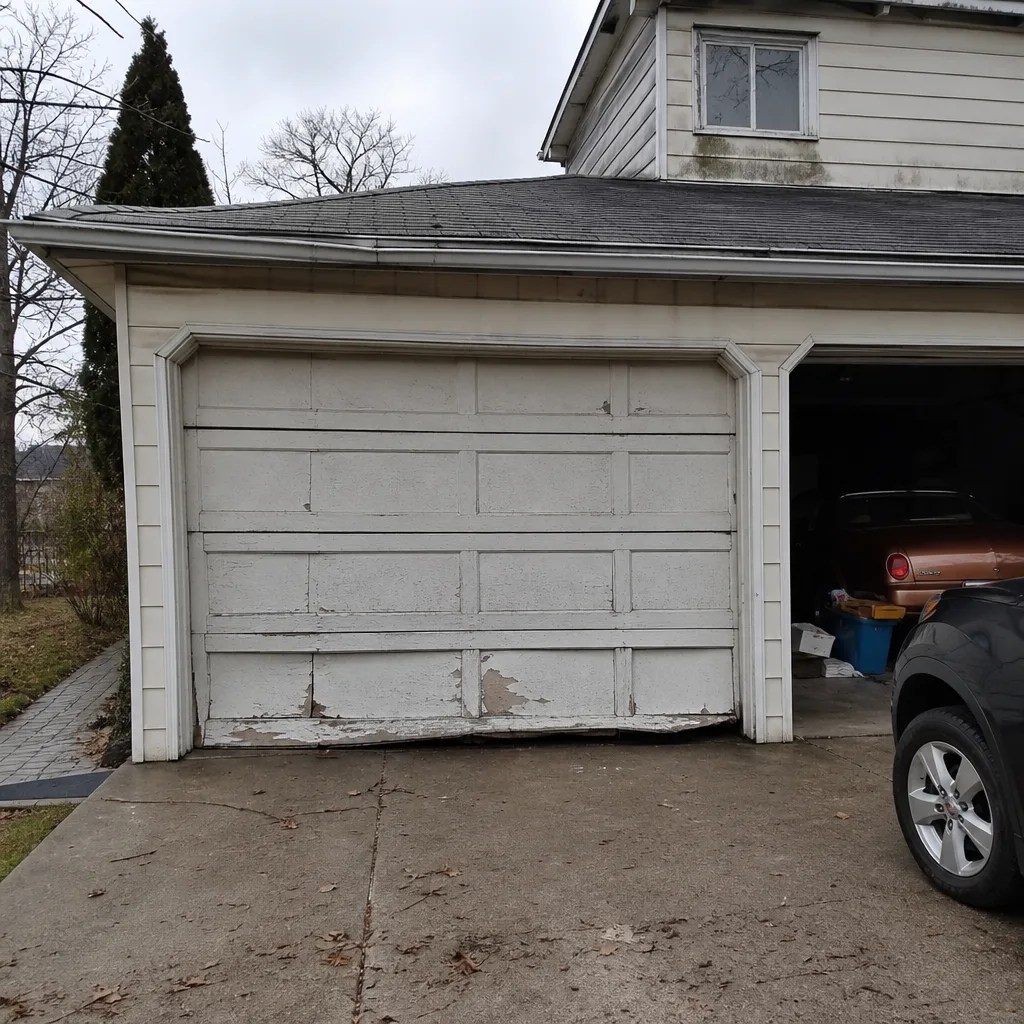 Before
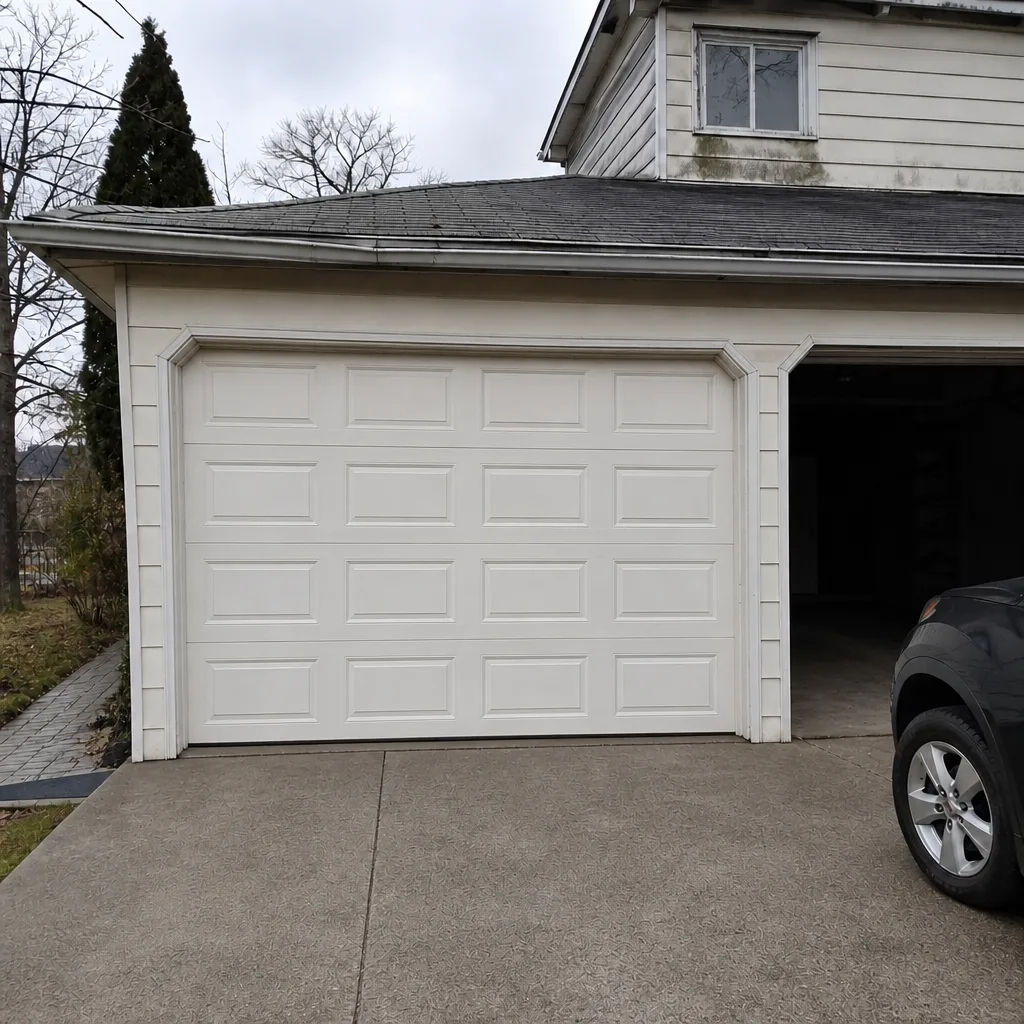 After
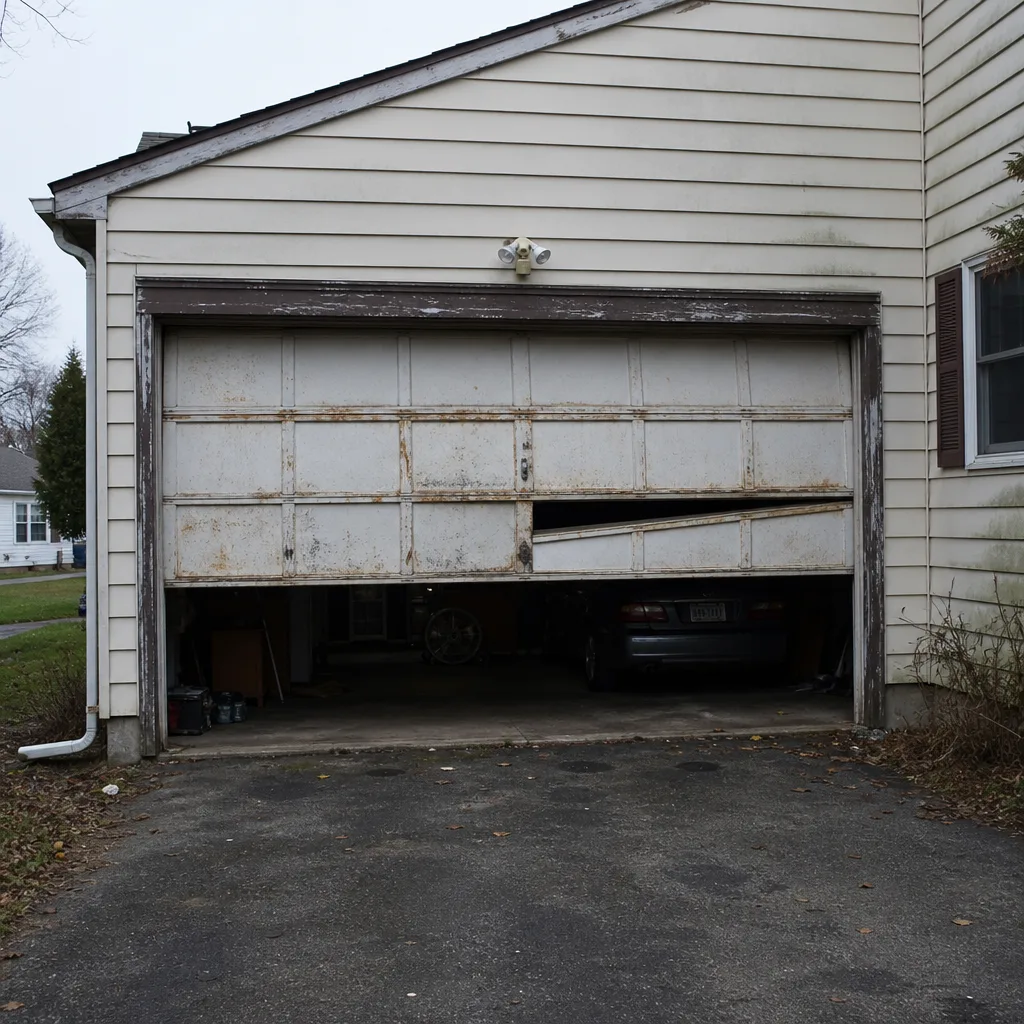 Before
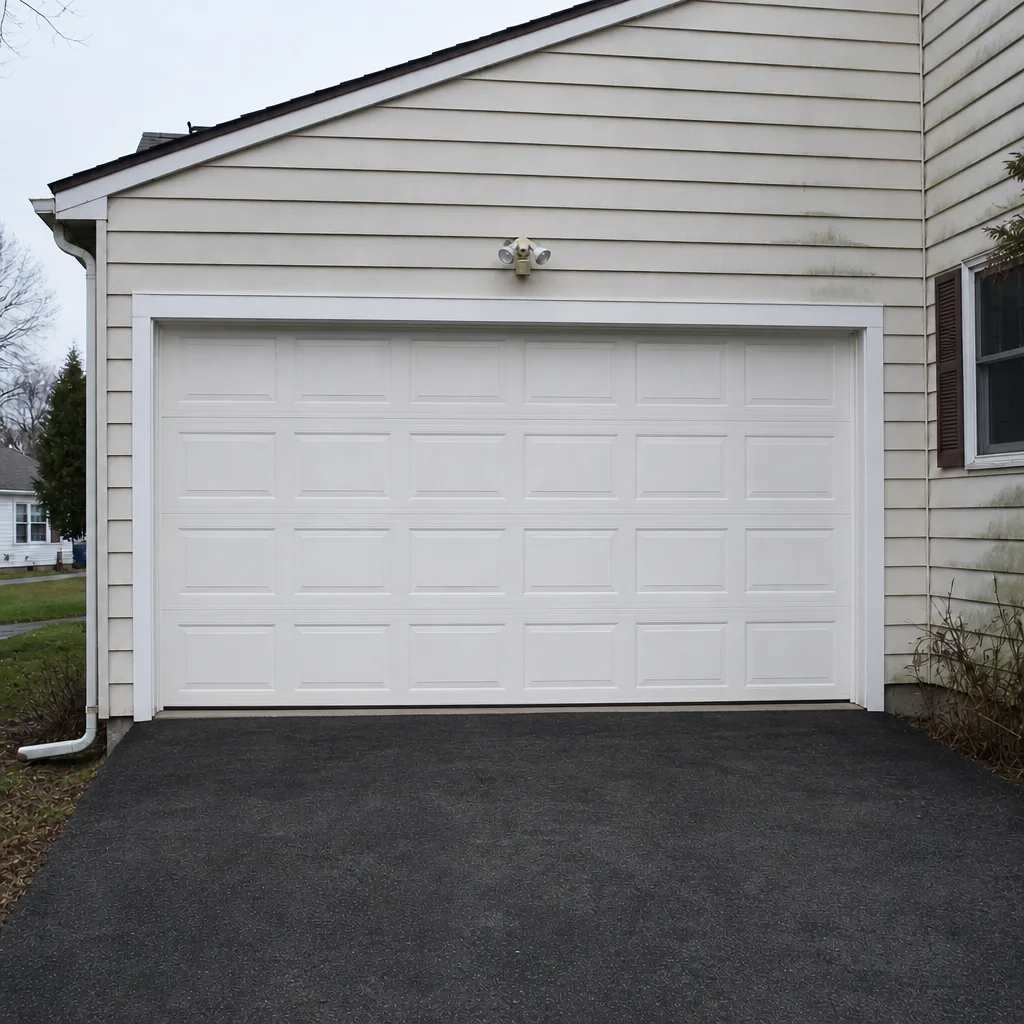 After
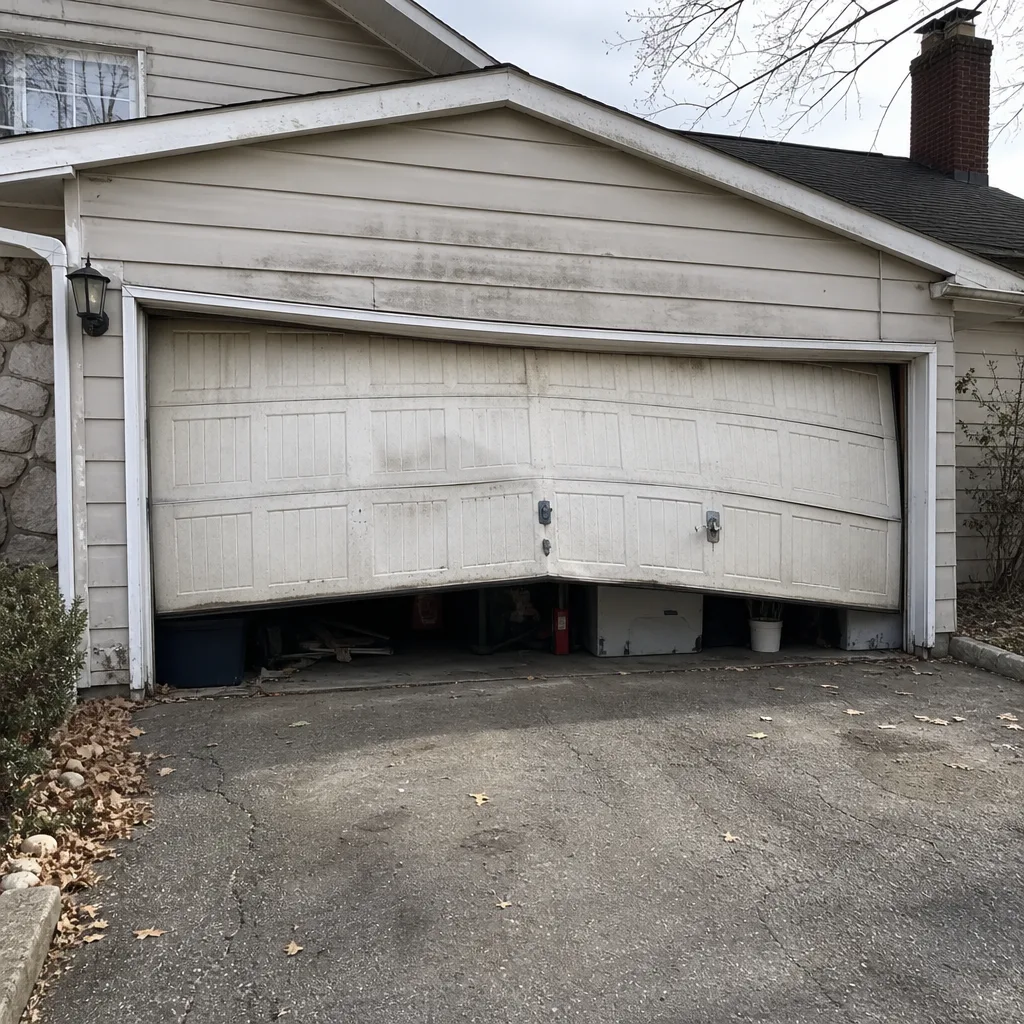 Before
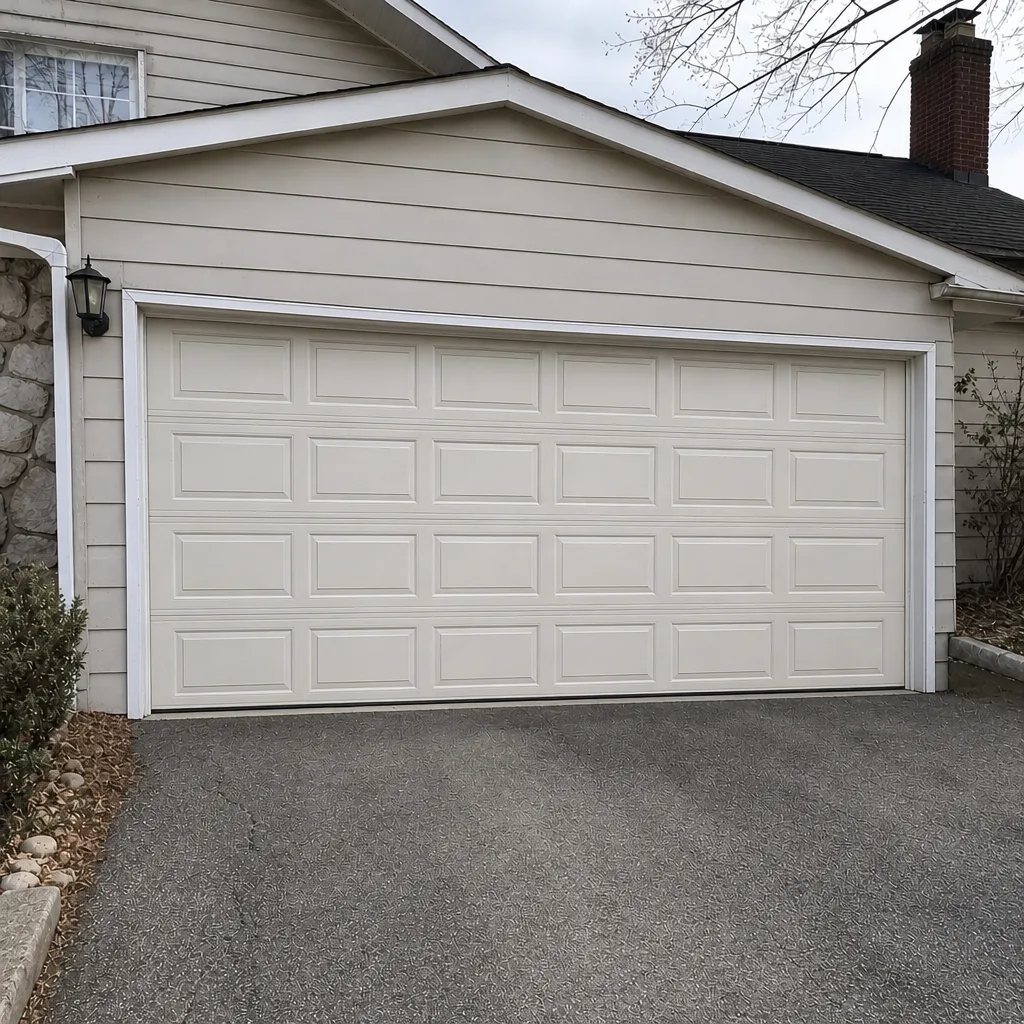 After
When to Call a Professional
Call for anything involving springs, cables, or a door that’s come off its track: those are the genuinely dangerous failures, and a trained technician should handle them. Call when the door won’t open or close, when the opener runs but the door doesn’t move, when the balance test in the routine above fails, or when a panel, roller, or hinge is damaged and the door is hard to operate. If a door is jammed or off-track and blocking a car or a business entrance, that’s an emergency call. Parsippany Garage Door Repair Co offers free estimates in Parsippany. Call (855) 513-2771.
Frequently Asked Questions
Insulated steel with galvanized hardware is the best all-around choice for Parsippany’s climate. It handles the sub-zero winters and humid summers with the least movement, resists rust where it matters, and matches the sizes of the colonial and split-level openings common here. Wood works if you keep up the resealing, and fiberglass is a reasonable pick on a protected opening.
Most single-car garages here have a 9-foot-wide opening and most two-car garages have a 16-foot opening. But 1970s – 90s Parsippany builds aren’t uniform, so measure the framed opening before ordering. A slightly off-nominal width can catch you out on a replacement.
For an attached garage in Parsippany, belt drive is usually the better fit because it’s the quietest and handles the thermal swings well. Chain drive is the value pick for a detached garage or a door far from living space. Screw drive is durable but noisier, so it fits a shop or detached setting better.
Because a door and opener will need parts over their life, and a brand with no local supply turns a repair into a long wait. We work on eight major brands (Raynor, LiftMaster, Chamberlain, Genie, Clopay, Amarr, Wayne Dalton, and Craftsman) so we can match the exact system in your garage. Phone for details: (855) 513-2771.
Treat the label as a starting point and look at the construction. A triple-layer door with a foam core delivers the best real performance, but a tight seal around the panel does as much to keep heat in during a Parsippany winter. A high number on a poorly sealed door is misleading.
A check and lubrication a couple of times a year is enough for most homes, plus a look at the bottom seal before winter. Anything involving springs, cables, or a door that’s off-track should go to a trained technician. Our technicians have up to 10 years of experience with these systems.
The Bottom Line
Parsippany homes have specific needs: a climate that swings hard between seasons, a housing stock of 1970s – 90s colonials and splits with sizing quirks, and a lot of original single-layer doors that are quietly costing heat. Match the door material to the temperature swings, measure the opening rather than assuming, choose a quiet belt drive for an attached garage, and pick a brand with real local parts supply. Leave springs and off-track doors to a trained professional. Whether you’re repairing, upgrading an opener, or replacing a door, Parsippany Garage Door Repair Co can handle it end to end, from Parsippany Garage Door Repair Co service to a full new install. Call (855) 513-2771 for a free estimate.
Written by the team at Parsippany Garage Door Repair Co.