Last updated November 23, 2026
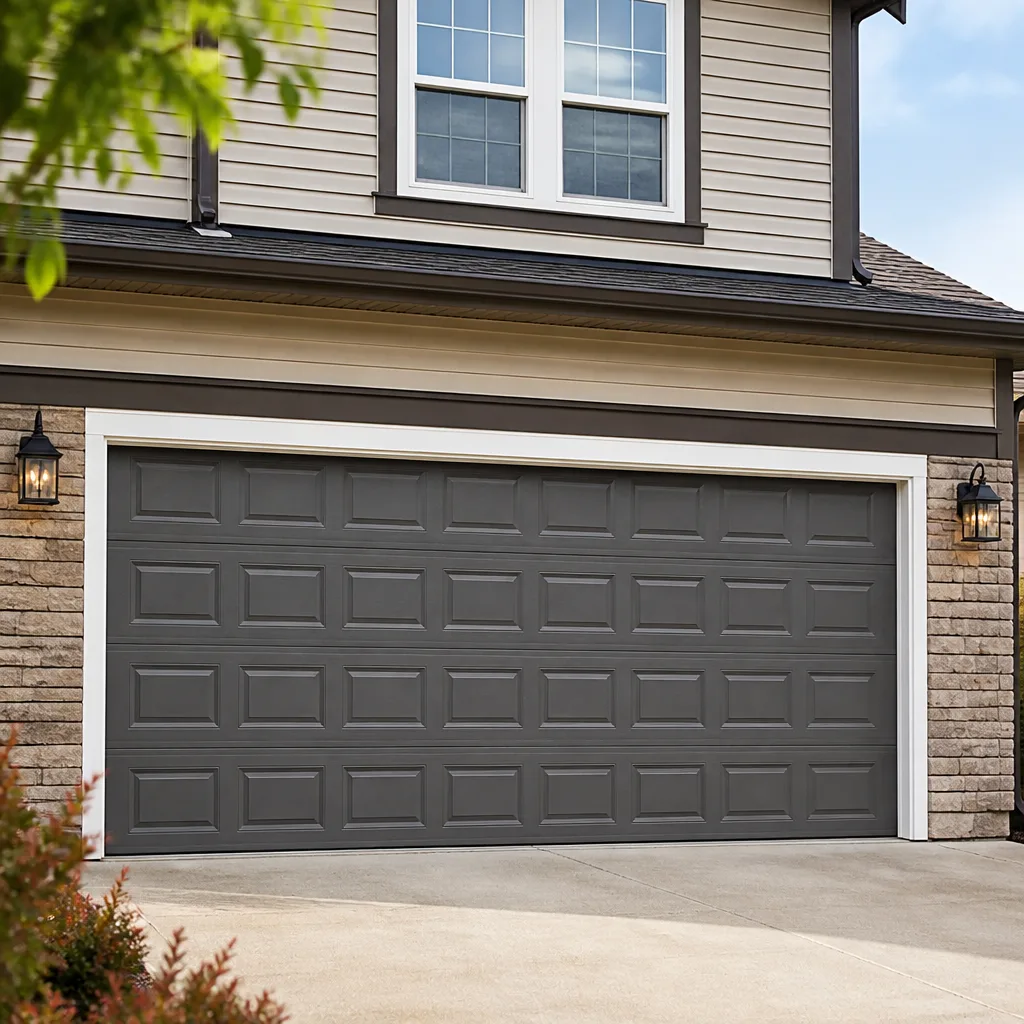 Raised-panel steel
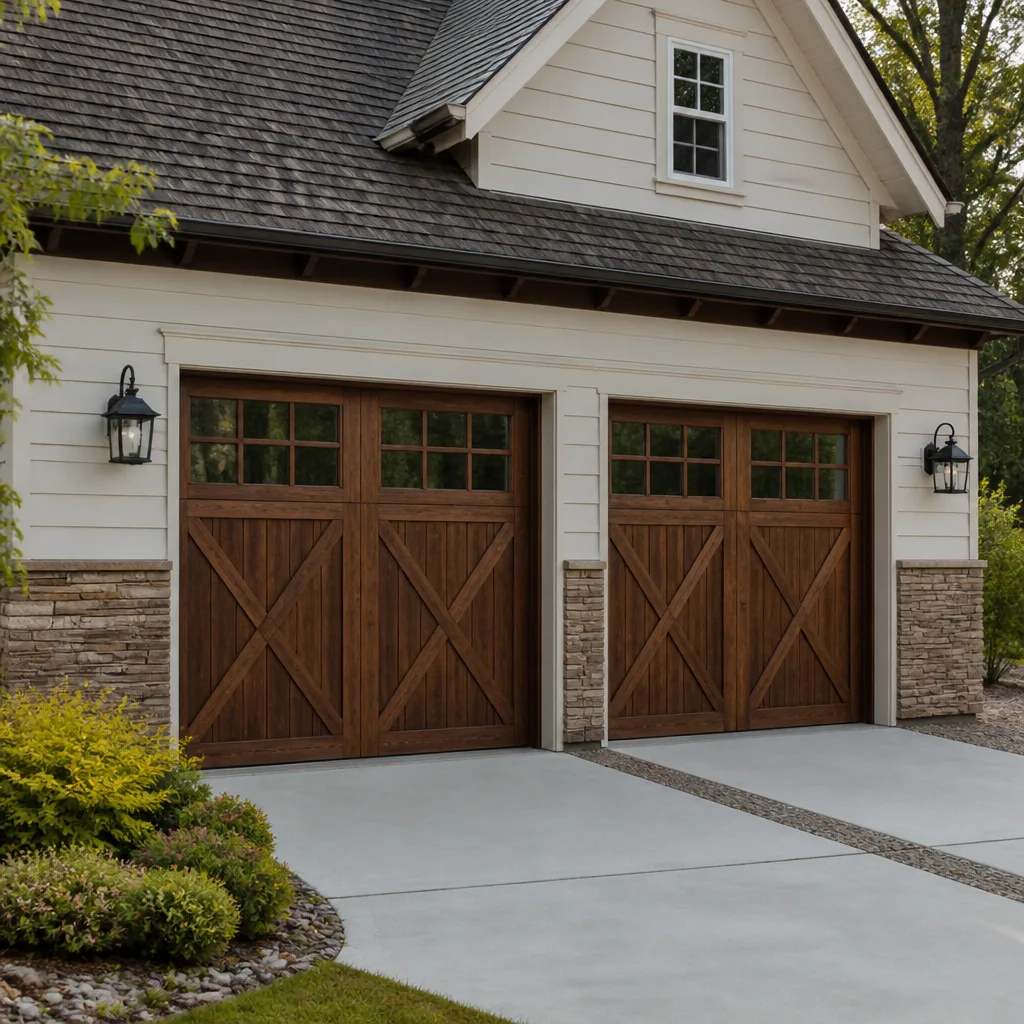 Carriage house
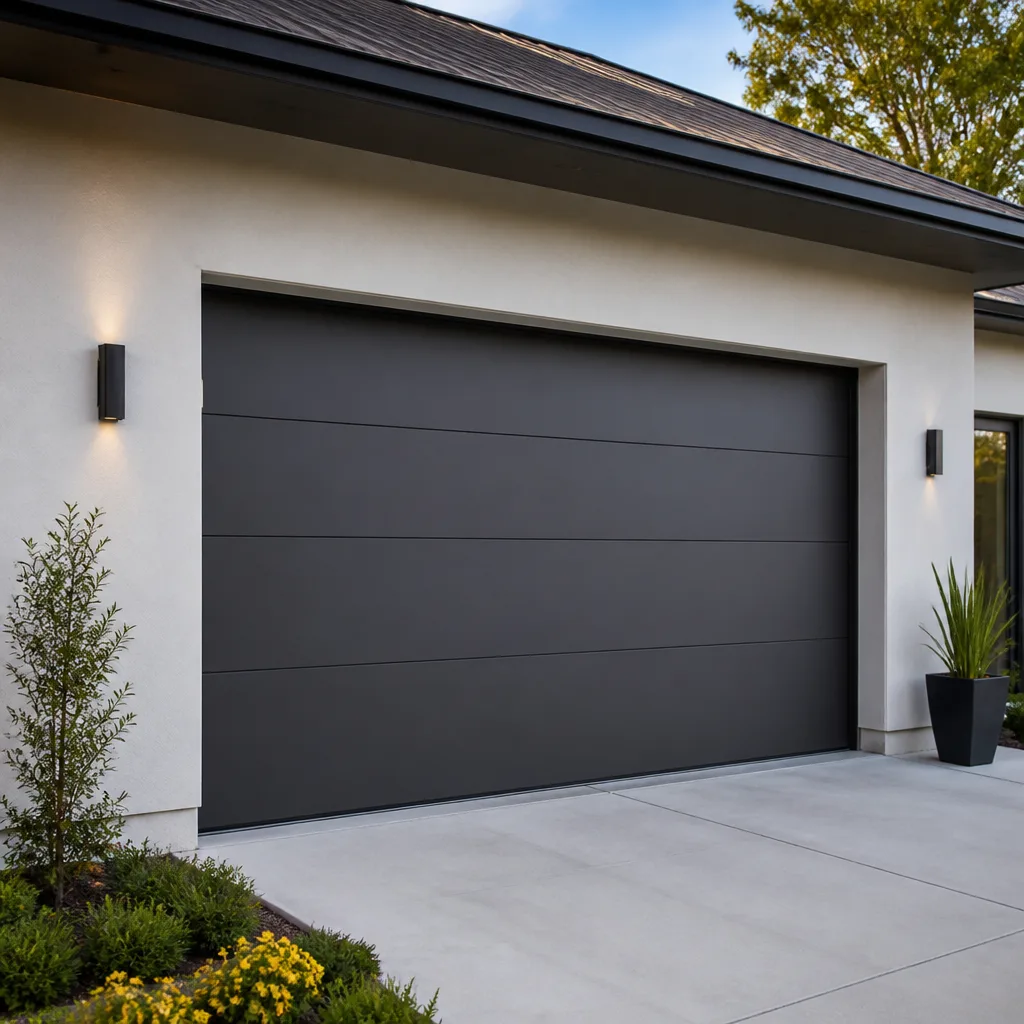 Modern flush
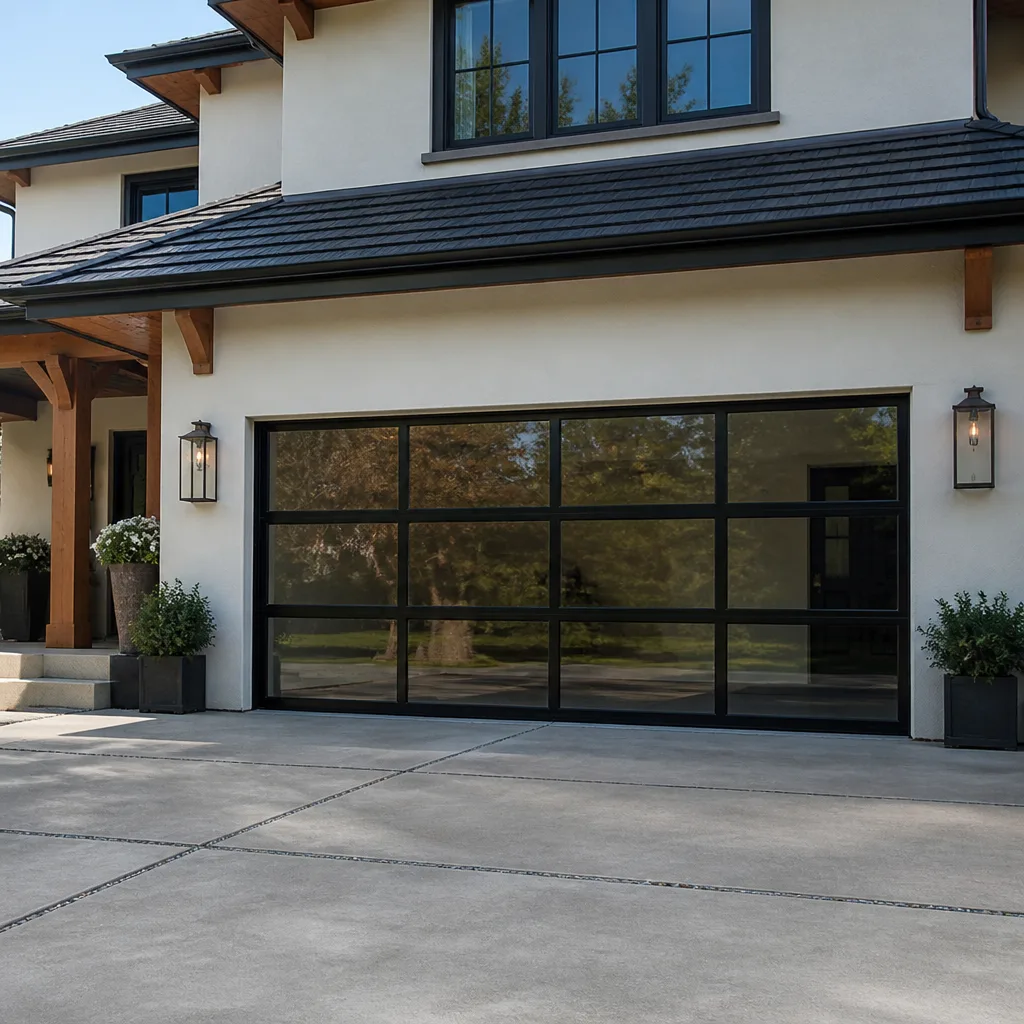 Full-view glass
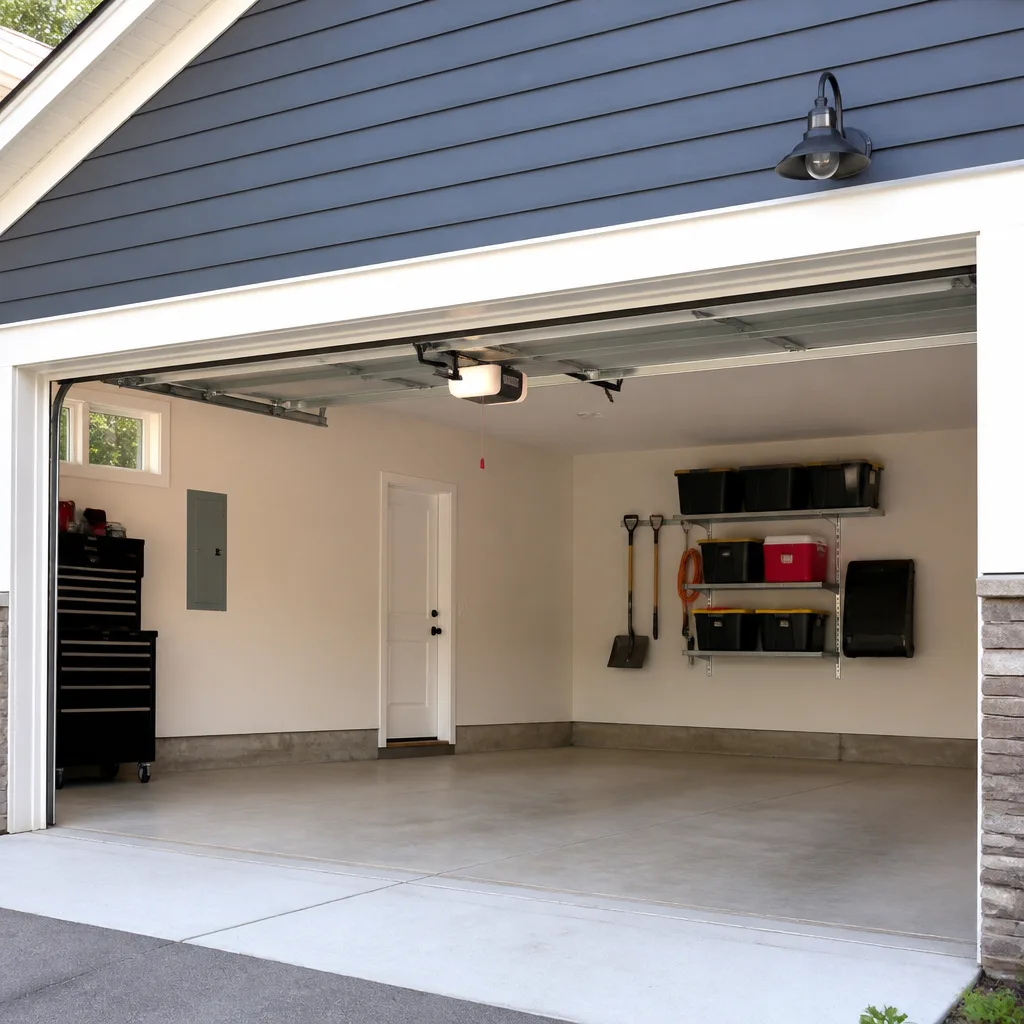 LiftMaster openers
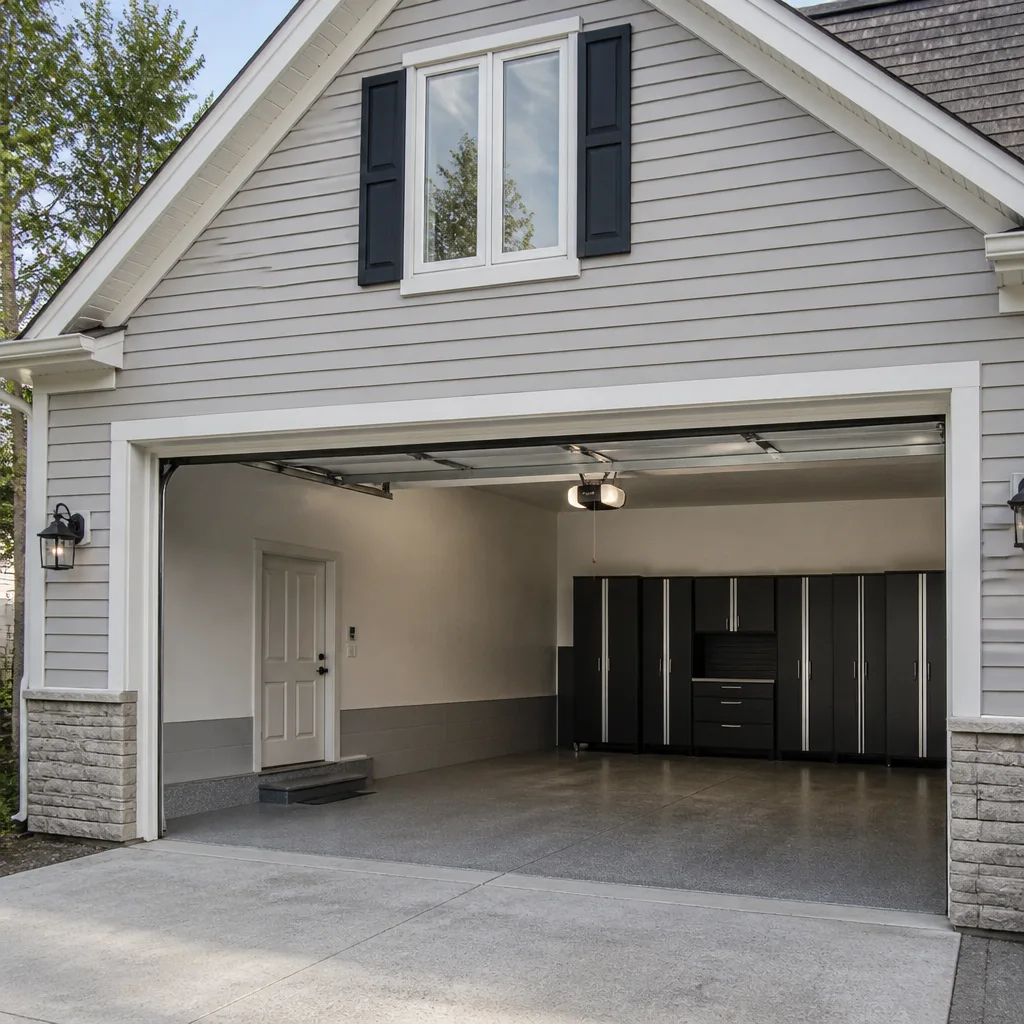 Chamberlain openers
Full 25-point door and opener safety check with every visit - springs, cables, rollers, tracks, and your LiftMaster or Chamberlain opener included
You get a price before we start. It does not change when the pro arrives.
Get your free estimateGarage Door Cost Breakdown: The Parsippany Homeowner’s Reference for 2026
The $799 door installation quote and the $1,400 quote are often for the exact same door. The difference is rarely the panel, the color, or the glass. It’s whether the hardware that makes the door move safely – springs, cables, drums, brackets, hinges, rollers – is itemized on the page or folded into one fuzzy line called “installation.” A quote that hides the hardware looks cheap until the technician arrives and the number grows. A quote that shows you every part looks expensive until you realize it already includes what the other quote was going to add later. This guide is the reference we wish every Parsippany homeowner had before they called anyone: what doors, springs, and openers should cost in this market in 2026, which add-ons are fair, which are padded, and how to tell the difference in about five minutes of reading a proposal.
Quick Answer
In Parsippany in 2026, a single-layer steel door installed typically runs about $1,050 to $1,750, a two-layer insulated door about $1,600 to $2,600, and a three-layer insulated door about $2,300 to $3,800, with Morris County labor already in those ranges. Spring replacement is usually $150 to $280 for one torsion spring, and openers land around $229 for a basic belt-drive unit up to roughly $489 for a longer-cycle DC unit, plus installation. The written estimate you get after a measure is the final price, and it should be agreed before any work starts.
Styles & brands we work with
- Raised-panel steel
- Carriage house
- Modern flush
- Full-view glass
- LiftMaster openers
- Chamberlain openers
Table of Contents
- What do the three tiers of steel doors cost in Parsippany?
- What does spring replacement actually cost?
- What’s the real difference between a $229 opener and a $489 opener?
- Which add-ons are fair and which are padding?
- When does repair beat replacement?
- How do you read a garage door quote line by line?
- What does a Parsippany garage door live through?
- Common Mistakes to Avoid
- When to Call a Professional
What do the three tiers of steel doors cost in Parsippany?
Steel doors come in three construction tiers, and the price gap between them is mostly about insulation and how the door holds up over years of use. The ranges below include Morris County labor at current rates, plus removal and disposal of the old door. They don’t include new tracks or a new opener unless you need them.
- Single-layer steel (no insulation): about $1,050 to $1,750 installed. A single stamped sheet of steel with a frame. Fine for a detached garage or a storage bay. Noisy and prone to denting.
- Two-layer (steel with a polystyrene core): about $1,600 to $2,600 installed. A steel skin with a bonded foam core. Quieter than single-layer and warmer on cold mornings. This is where most Parsippany homeowners land.
- Three-layer (steel, polyurethane core, steel back): about $2,300 to $3,800 installed. Steel on both faces with a dense foam core and thermal breaks. The heaviest, quietest, and strongest of the three. It also needs properly matched springs, because it weighs more than the door it’s replacing.
Sizing matters. A single-car door and a double-car door are not the same job, and a wide door needs heavier springs and a stronger opener. The number that surprises people is the hardware line: a $1,100 door can come with $400 or more in springs, cables, brackets, and installation hardware that a low quote may simply omit and add back at the end.
We work across the full range of manufacturers, including Amarr and Wayne Dalton doors, so when you’re comparing quotes the brand matters less than whether the proposal states the model, the panel thickness, and the hardware. If you want to talk through the tiers before you commit, our garage door repair team handles the conversation and the measure.
What does spring replacement actually cost?
Spring replacement in Parsippany is typically $150 to $280 for one torsion spring, all-in. That range covers the spring, the labor, and the trip to dispose of the old one. A matched pair, which is what we usually recommend replacing together, is about twice that, so roughly $300 to $560. This is one of the most commonly padded line items in our trade, and it’s worth understanding why before you agree to a number.
A garage door spring is under extreme tension at all times. It’s one of the most hazardous components in a house, which is why spring work is never a do-it-yourself job and why we treat it as a safety-critical service rather than a quick fix. A technician who has done this hundreds of times knows exactly how to release the tension before touching anything. A homeowner who hasn’t does not. That risk is the reason spring repair is priced as a specialty rather than an errand.
What a fair spring quote itemizes
- Spring type and size. Torsion or extension, and the correct wire gauge for the door’s weight. A mismatched spring will fail early.
- Part cost. The OEM spring itself, usually a modest line.
- Labor. The bulk of the quote. It covers the tension release, the replacement, and the balancing of the door afterward.
- Disposal. A small fee most contractors add without mentioning up front. You’ll see it on the invoice if it wasn’t in the quote.
The safety caveat is not optional in our line of work. Springs and cables are the two components we will not walk a homeowner through. If a spring has snapped, the door is unsafe to operate, and it should be left alone until a trained professional handles it. Spring repair done safely means exactly that. Our garage door spring repair service is built around that caution first. The price is quoted and agreed before any work starts, so there are no surprises when the old spring comes off.
What’s the real difference between a $229 opener and a $489 opener?
Most of the price gap between a $229 opener and a $489 opener comes down to motor cycle rating, not brand or features. A lower-cost opener is built for fewer open-and-close cycles over its life. A higher-cost DC unit with a longer cycle rating is built to last through years of daily use. In a Parsippany home where the door goes up and down several times a day, that difference shows up as a replaced opener versus a working one.
- Belt-drive basic unit, around $229: quiet, reliable, built for moderate daily use. Many homeowners buy this for the main door and it’s fine.
- Mid-tier unit, around $300 to $380: longer cycle rating, better security encoding, smoother start and stop. The sweet spot for a family garage used constantly.
- Higher-end DC unit, around $449 to $489: the longest cycle rating, variable speed, quieter operation, and the strongest security on modern systems. Worth it if the door is the daily entry to the house.
Installation is a separate line unless the quote bundles it. On typical jobs, opener installation adds roughly $120 to $200 on top of the unit. A low-ball opener quote that buries that labor in a service-call fee is a common trick; the unit looks cheap, the total doesn’t. We repair and install openers across LiftMaster, Chamberlain, Genie, and Craftsman lines, both legacy and current smart-drive models, so the unit in your garage is one we already know. Our garage door opener repair page covers what fails on those systems first and what’s worth replacing.
Which add-ons are fair and which are padding?
Add-ons are the second place a quote gets padded, after the hardware line. A keypad, a Wi-Fi module, and a battery backup are all fair to include, but how they’re priced tells you something about the contractor. Each one should appear as its own line with its own price, bundled with the opener only when the bundled price is honest. When they appear a second time on the invoice, the quote was padded.
- Keypad: typically $30 to $60 for the unit plus a small install line. Reasonable when it’s a line item. Not reasonable when it’s “included” and then charged again at install.
- Wi-Fi module / smart hub: $40 to $90 as a line item on most modern openers. Ask whether the opener you’re buying already has the module built in before you pay for it separately.
- Battery backup: $60 to $110 depending on the unit. Fair to include for a home where the door is the everyday exit, since a power cut shouldn’t strand the car.
- Safety eyes / photo-eye sensors: $25 to $50 each. If a quote charges more than once for the same sensor, ask why.
- Springs, cables, and brackets: these are the hardware line. They belong on the quote, itemized, not hidden inside “installation.”
A fair quote shows you the unit, the hardware, the add-ons, and the labor as separate lines. A padded one collapses the hardware and the add-ons into the installation price and stays silent on what’s inside. In our experience, the second style is the one that grows between quote and invoice.
When does repair beat replacement?
The rule of thumb many contractors use is the “50% rule”: if a repair costs more than half the cost of a new door, and the door is in the second half of its expected life, replacement is worth considering. The problem is that the rule is often applied backward. A contractor who wants the installation job quotes the repair high enough to push past the threshold, so the 50% rule “pencils out” for them, not for you.
A better way to think about it:
- Estimate the repair. Get a full written estimate, not a verbal one over the phone.
- Compare to the new-door price for the same tier. If you’re replacing a two-layer door, the comparison is against a two-layer door, not a bottom-tier single-layer.
- Count the years remaining. A door in good structural shape has years left. A repair that buys those years is often the better call.
- Ask what the repair doesn’t fix. A new spring doesn’t fix a dented panel. A new opener doesn’t fix a sagging track. If two or three systems are failing at once, the repair total can make replacement the honest answer.
In our experience, the 50% rule is a useful sanity check and a bad mandate. If a contractor quotes the repair above the rule without explaining what’s actually failing, ask which specific components are driving the number. If the answer is vague, the quote is the reason, not the door.
How do you read a garage door quote line by line?
A garage door quote tells you more about the contractor than the price does. The number matters. The structure matters more, because it’s the structure that tells you whether the number is real. Here’s a simple way to read a Parsippany quote before you sign it.
- Find the door model. Brand, model number, panel thickness, and core type. If it says “steel door,” ask which one.
- Find the hardware line. Springs, cables, drums, brackets, hinges, rollers, and track all listed, or at least a hardware allowance with a dollar figure. If this line is missing, the door isn’t fully priced.
- Find the opener and add-ons. Unit model, install labor, and each add-on as its own line. Bundles are fine when the bundle price is stated, not implied.
- Find disposal. Old door removal and disposal, stated as a line or included in the install price.
- Find the warranty. Door, opener, springs, and labor, listed separately. A spring warranty that’s shorter than the door warranty is normal; a labor warranty that’s missing isn’t.
- Confirm the final price. The written estimate is the price. Nothing should be added after work begins unless you’ve agreed to a change in writing.
Two quotes for the same tier of door, one at $799 and one at $1,400, usually differ in exactly this: the cheap one omits the hardware and the disposal, or prices the opener separately and gets you on the back end. The $1,400 quote isn’t 75% better. It’s just complete. We put every proposal together this way, which is why you can read ours line by line and compare it against anyone else’s.
What does a Parsippany garage door live through?
A Parsippany garage door spends its life going up and down through real North Jersey seasons, from hot humid summers to freezing winters with snow and ice. That cycle is what wears springs, stretches cables, and works the opener motor harder than a garage in a milder climate would. Cold mornings are the classic failure window: the metal contracts, the springs get brittle, and a door that has been fine for years suddenly won’t lift.
Winter weather brings snow and ice that can pack into the tracks and under the door, and the weight of the buildup strains everything that moves. That’s why we ask about track condition whenever we quote a repair; a door that’s off-track after a winter isn’t a spring problem, it’s a track and alignment problem, and the repair is different. In our experience, the homeowners who get the longest life out of a garage door in Parsippany are the ones who keep the tracks clear and the door balanced, and who don’t skip a repair because the door is “still working.”
If your door has been struggling through recent weather, the honest first step is a diagnostic, not a guess. You can reach the team at Parsippany Garage Door Repair Co to schedule a measure or a repair assessment, and the estimate is free.
Common Mistakes to Avoid
- Accepting a quote that doesn’t itemize the hardware. A single “installation” line is where springs, cables, and brackets get added later. Ask for the hardware line in writing before you compare prices.
- Choosing the cheapest opener without asking about cycle rating. The unit price is only half the story. A shorter-cycle motor is a replacement waiting to happen in a daily-use garage.
- Replacing one spring when the pair is due. A matched pair is usually replaced together, and the second spring is on the same wear schedule as the first. Replacing one now often means paying for the second soon.
- Treating the 50% rule as a rule. It’s a sanity check. If a contractor quotes the repair above it, ask which components are driving the number and why.
- Skipping the disposal line. A quote that doesn’t mention disposal is either including it silently or adding it at the end. Get it on the page.
- Ignoring the track and the door balance after a winter. A door that binds, squeals, or drifts isn’t just noisy. It’s telling you the springs and alignment are out of tune, and the fix gets more expensive the longer it waits.
- Paying for a Wi-Fi module the opener already has. Ask whether the unit you’re buying is smart-drive before you pay to add a hub it ships with.
When to Call a Professional
Some garage door work is a genuine safety matter, and springs and cables are at the top of that list. If a spring has snapped, a cable has come loose, or the door is hanging off its track, don’t run it. Property damage and injury are both real outcomes, and a trained technician can assess and fix it safely. Other jobs that call for a professional: a door that reverses before it closes, an opener that runs but doesn’t lift, a door that’s become noticeably heavier to lift by hand, and any installation or replacement, since a door that’s measured and matched to the right springs stays safe for years.
Parsippany Garage Door Repair Co offers free estimates in Parsippany – call (855) 513-2771. We’ll lay out the repair or the replacement, line by line, and you decide.
See the difference
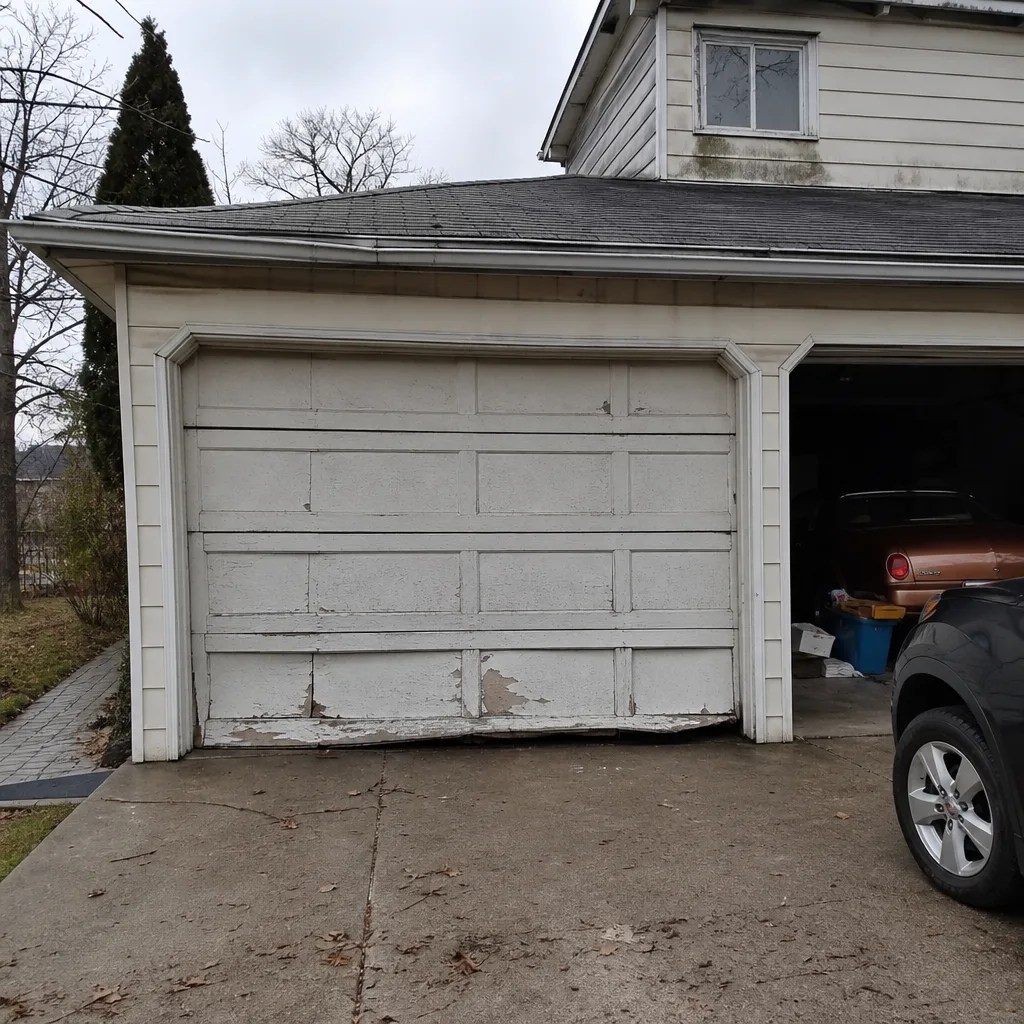 Before
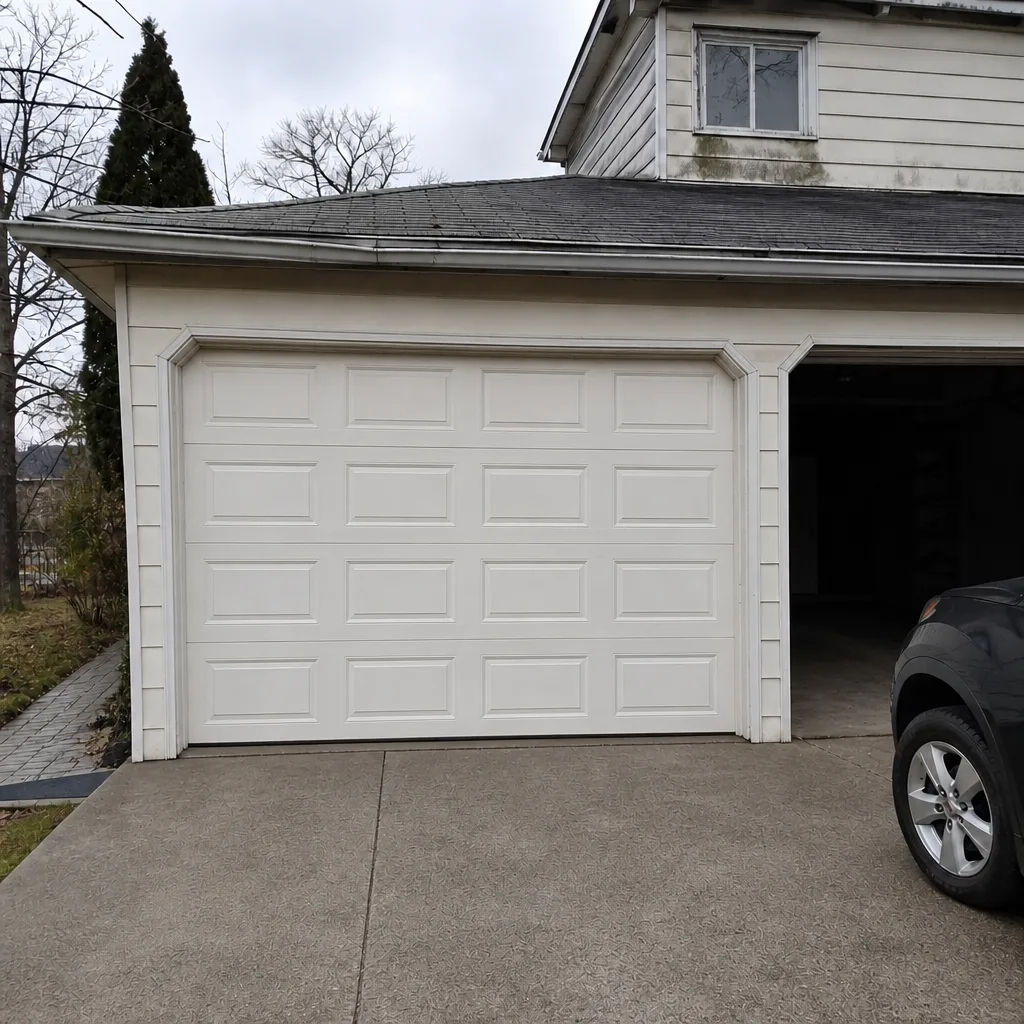 After
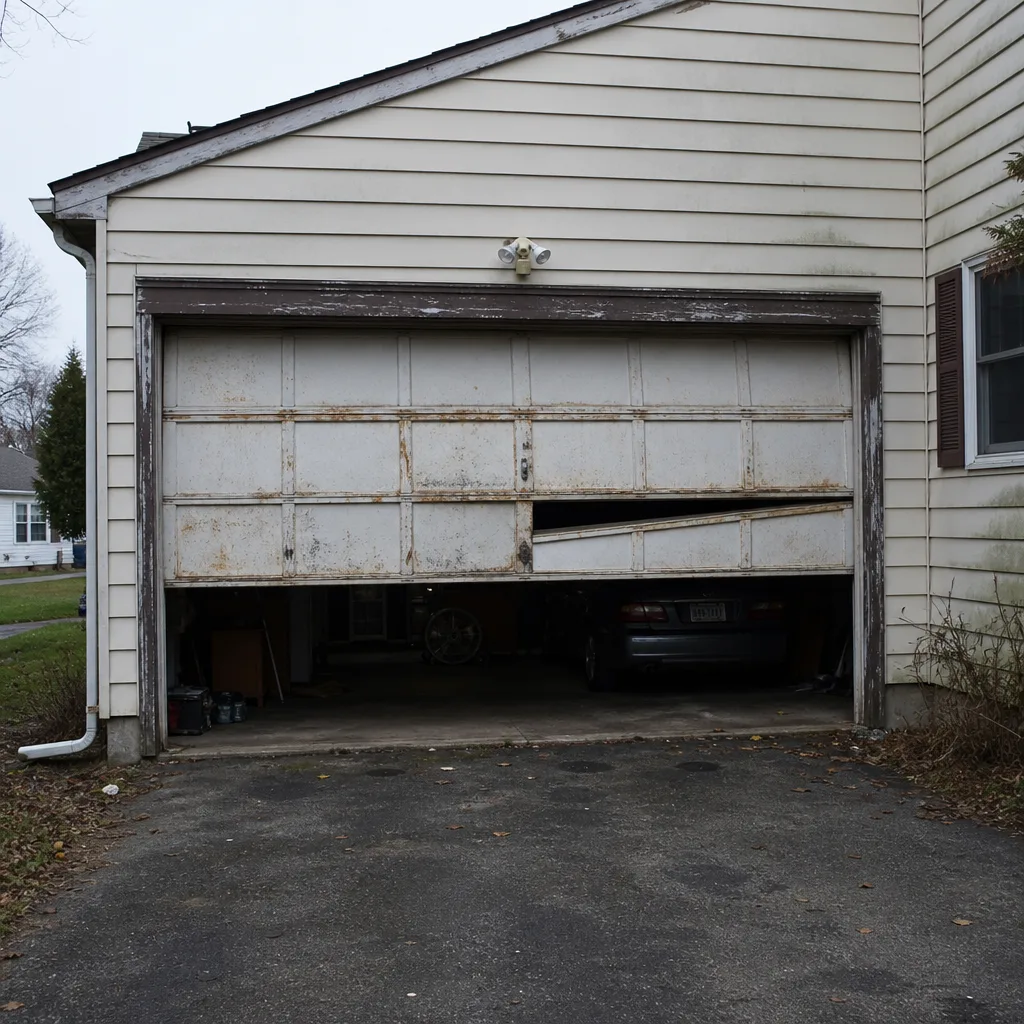 Before
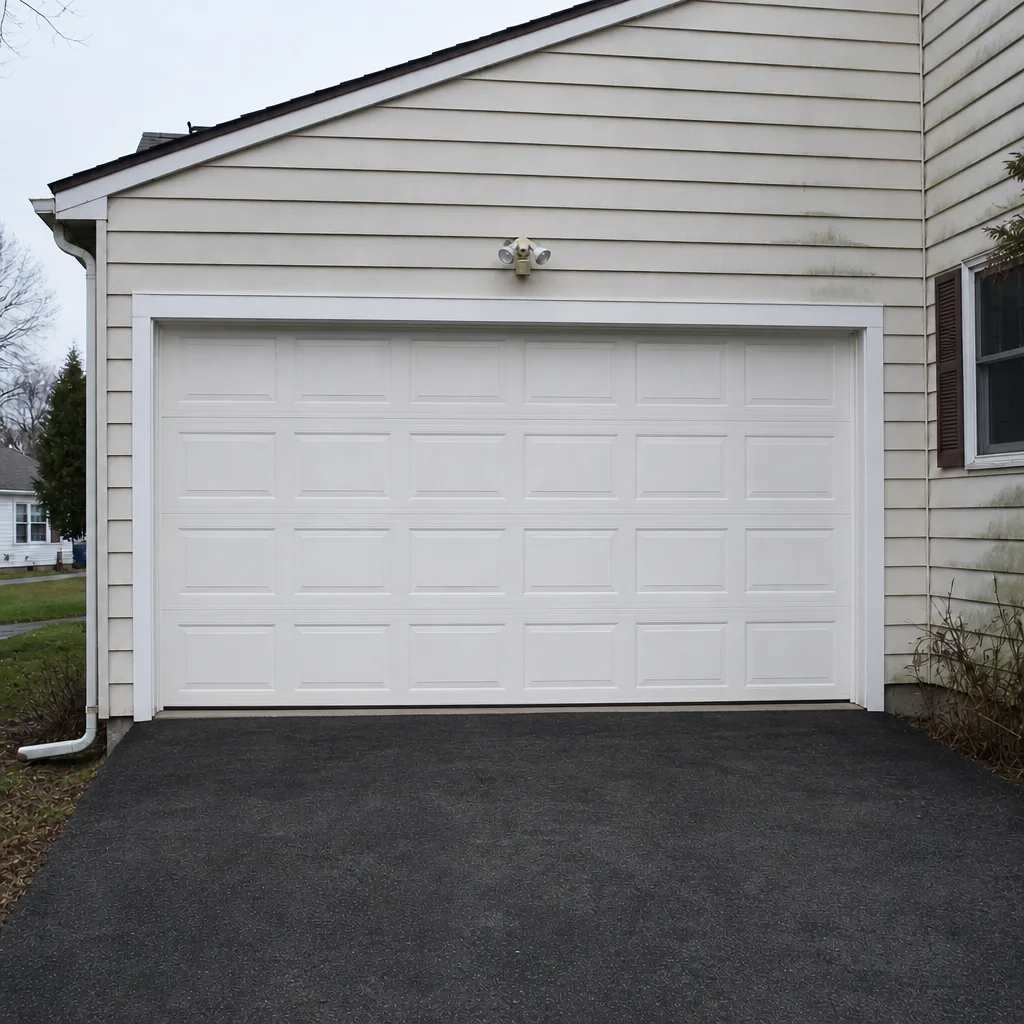 After
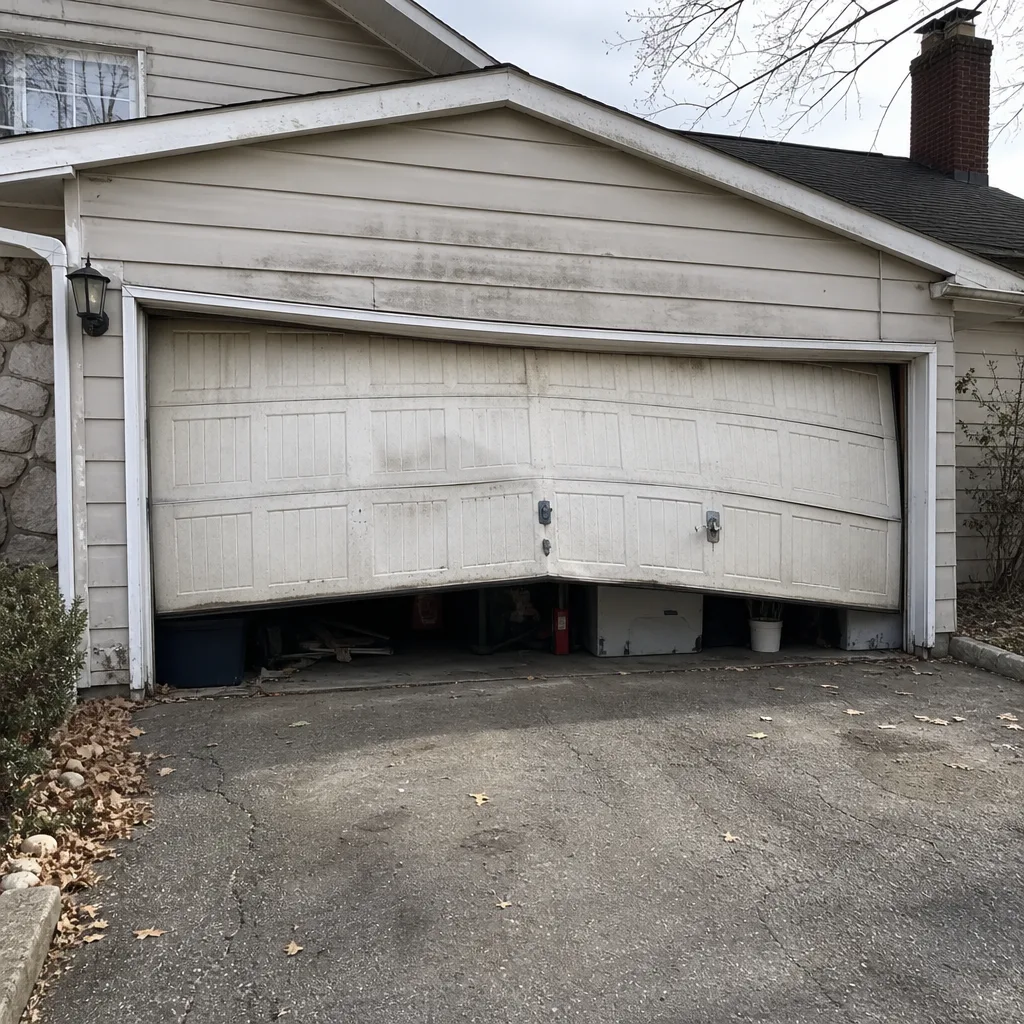 Before
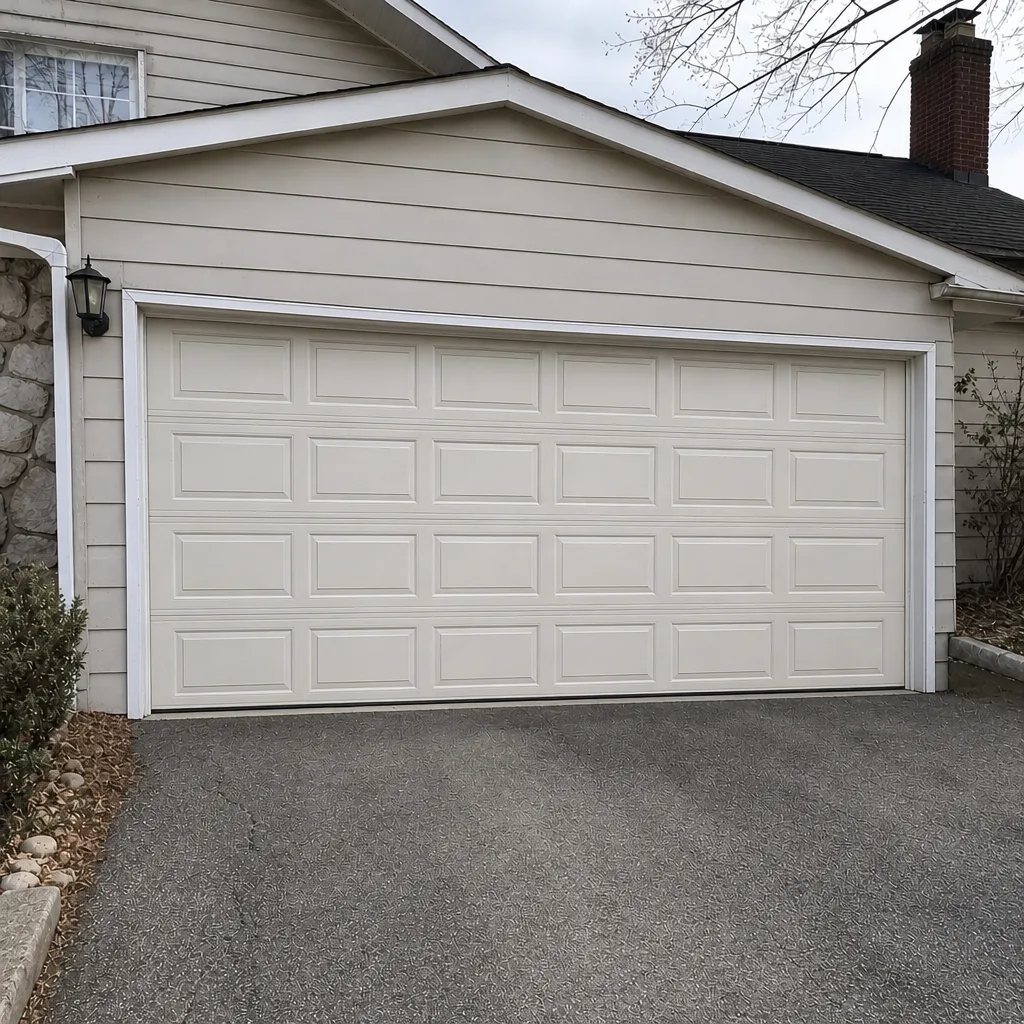 After
Frequently Asked Questions
A new single-layer steel door installed in Parsippany runs about $1,050 to $1,750, a two-layer insulated door about $1,600 to $2,600, and a three-layer door about $2,300 to $3,800, with local labor included. Opener installation and any new track are separate lines. The written estimate after the measure is the final price. Call (855) 513-2771 for an exact quote – estimates are free.
Repair is usually cheaper when one system has failed and the door is structurally sound. The 50% rule says to consider replacement when a repair costs more than half a new door and the door is in the later part of its life. Ask which components are driving the repair total before you trust the rule. Call (855) 513-2771 to talk it through.
The spread is usually the disposal fee and the labor, not the spring itself. A fair quote itemizes the spring, the labor, and the disposal. A padded one collapses those into a single number. Ask for the breakdown in writing. Call (855) 513-2771 for a line-by-line spring quote.
No. The written estimate you receive after the measure is the price, and it’s agreed before any work starts. If the door turns out to need a component the first assessment couldn’t see, you’ll get a revised written quote to approve, not a surprise invoice. Call (855) 513-2771 for a free estimate.
The main difference is cycle rating: how many open-and-close cycles the motor is built to handle. The $489 unit is generally a longer-cycle DC motor that holds up better in a garage door used daily. A $229 unit is fine for lighter use. Ask about the cycle rating before you choose. Call (855) 513-2771 to compare units for your door.
No. A new opener is installed on your existing door and track, as long as both are in sound condition. A door that’s off-balance or a track that’s bent should be repaired before or alongside the opener work. Call (855) 513-2771 for an assessment of both.
The Bottom Line
Garage door pricing in Parsippany in 2026 isn’t mysterious once you know what to look for. The three steel door tiers have real ranges, spring replacement has an honest all-in price, and the opener gap is about cycle rating far more than features. The quotes that surprise homeowners are the ones that hid the hardware, the disposal, or the add-ons inside a single installation line. Read the proposal line by line, confirm the written estimate is the price, and ask which components drive any number that looks off. That habit alone will keep you out of the padded-quote trap and get you the door, spring, or opener you actually paid for. Call (855) 513-2771 for a free estimate in Parsippany.
Written by the team at Parsippany Garage Door Repair Co.